

Table of Content
- Introduction
- Role of Lime in Ladle Furnace Desulphurisation
- Choosing the Right Lime for Steelmaking
- Best Practices for Lime Addition in Ladle Furnace
- Quicklime Reactivity and Its Impact on Sulphur Removal
- Factors Affecting Desulphurisation Efficiency
- Common Mistakes to Avoid During Lime-Based Desulphurisation
- How Synergy Chemical Industries Ensures Lime Quality
- High Calcium Lime vs. Low Reactivity Lime
- Conclusion
- FAQs
Introduction
In steelmaking, achieving high purity is critical especially when it comes to controlling sulphur levels. Even small amounts of sulphur can compromise strength, ductility, and weldability. That’s where ladle furnace desulphurisation steps in.
A well-executed desulphurisation process improves steel quality significantly. One of the most effective tools in this step? Lime specifically, high-purity quicklime. But simply using lime isn’t enough. To truly optimise the reaction, you need to follow the right practices starting with lime quality and ending with how it’s handled inside the furnace.
Role of Lime in Ladle Furnace Desulphurisation
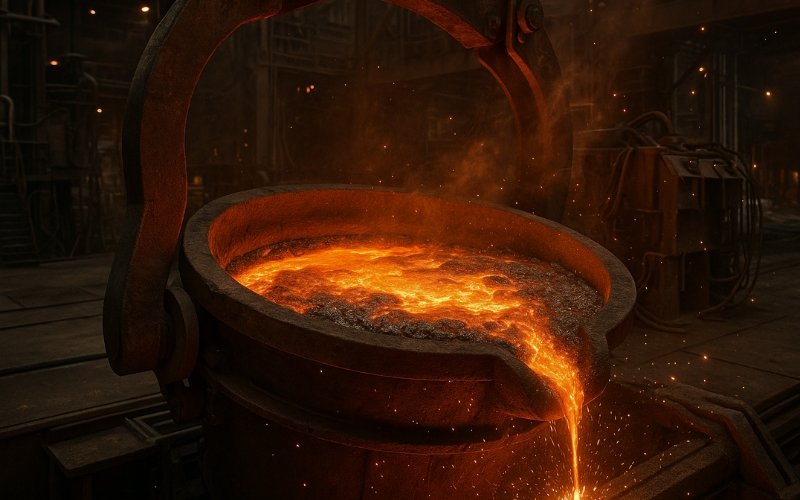
Lime plays a critical role in removing sulphur from molten steel. When added to the ladle furnace, lime reacts with sulphur to form calcium sulphide (CaS), which is absorbed into the slag layer.
This slag acts like a sponge, trapping impurities. For this to happen effectively, the lime must be reactive, and the slag must remain fluid. Without this balance, sulphur removal becomes inconsistent, leading to inferior steel quality.
Lime also helps adjust slag basicity a key factor influencing the sulphur-capturing capacity of the system.
Choosing the Right Lime for Steelmaking
Not all lime is made equal. In ladle furnace desulphurisation, quicklime with high reactivity and low impurity content is essential. Here’s what to look for:
- High calcium oxide content (CaO > 90%)
- Low moisture and volatile matter
- Minimal silica, iron, and alumina impurities
- Consistent particle size
High calcium lime ensures faster and more complete reactions, especially when sulphur removal needs to be done within short processing windows.
Synergy Chemical Industries specialises in providing high-quality quicklime tailored for steelmaking needs engineered for fast reactivity and minimal slag interference.
Best Practices for Lime Addition in Ladle Furnace
A. Quantity and Timing of Lime Addition
- Adding too little lime reduces sulphur pickup by the slag.
- Too much, and it leads to excess slag volume, increasing costs and decreasing furnace efficiency.
- Lime should be added early and in a controlled flow, ideally during or just after alloying additions to maximise contact with molten steel.
B. Temperature Control During Desulphurisation
- Ideal temperature range: 1550–1650°C
- Below this, slag fluidity reduces; above it, sulphur can re-enter the steel
- Use real-time temperature monitoring for consistent control
C. Slag Composition Optimization
- Target a basicity ratio > 2.5 (CaO/SiO₂)
- Add MgO to prevent slag attack on refractories
- Maintain a fluid, foamy slag to allow better sulphur absorption
Quicklime Reactivity and Its Impact on Sulphur Removal
Lime reactivity refers to how fast lime reacts with sulphur in molten steel. High-reactivity lime shortens desulphurisation time, reduces the need for repeat treatments, and helps keep temperatures stable.
Low-reactivity lime, on the other hand:
- Slows down sulphur removal
- Leads to uneven slag formation
- Increases fuel consumption due to prolonged furnace use
Using reactive quicklime from Synergy Chemicals India ensures consistent performance and better process control.
Factors Affecting Desulphurisation Efficiency
To get the most out of your desulphurisation reaction, consider:
- Lime Particle Size: Finer particles increase surface area but may cause dusting
- Mixing and Stirring: Uniform mixing ensures lime contacts sulphur evenly
- Slag Basicity: Higher basicity improves sulphur capture
- Holding Time: Longer holding enhances reaction completion—but must be balanced with productivity
Common Mistakes to Avoid During Lime-Based Desulphurisation
- Using Hydrated Lime: It’s less reactive and not suitable for high-temperature reactions
- Ignoring Lime Storage Conditions: Moisture in lime reduces reactivity
- Incorrect Feeding Rate: Either too fast (causes splashing) or too slow (misses the reaction window)
- Not Monitoring Temperature: Overheating reverses desulphurisation
How Synergy Chemical Industries Ensures Lime Quality
At Synergy Chemical Industries, we focus on delivering quicklime with consistent reactivity, purity, and size grading for steel applications. Here’s how:
- Strict selection of raw limestone
- Optimised kiln operations for uniform burning
- Closed-loop quality control labs
- Customised size grading as per furnace type
This commitment makes us a trusted name in the Indian steel sector for desulphurisation-ready lime.
High Calcium Lime vs. Low Reactivity Lime
| Property | High Calcium Lime (Synergy) | Low Reactivity Lime |
| Sulphur Removal Efficiency | High | Low |
| Reaction Speed | Fast | Slow |
| Slag Compatibility | Excellent | Inconsistent |
| Fuel Efficiency | Improved | Higher Consumption |
| Refractory Wear | Reduced | Increased |
| Downtime | Minimal | Frequent Reprocessing |
Conclusion
Lime is more than a commodity it’s a chemical tool that, when used right, enhances steel purity, boosts operational efficiency, and cuts down waste. From lime selection to slag management, each step matters.
Synergy Chemical Industries provides industrial-grade quicklime optimised for high-performance steelmaking. By following the best practices outlined above, your steel plant can achieve superior desulphurisation with confidence.
FAQs
Q1. How to use lime in ladle furnace for desulphurization?
Answer: Add quicklime at the right stage of ladle treatment, typically during or right after alloy additions. Ensure good mixing and maintain target slag basicity and temperature.
Q2. What grade of lime is best for steel desulphurisation?
Answer: Use high calcium quicklime with >90% CaO content, low impurities, and high reactivity.
Q3. Why is temperature control important in lime-based sulphur removal?
Answer: Sulphur removal is temperature-sensitive. If too low, slag solidifies. If too high, sulphur re-enters steel. Ideal: 1550–1650°C.
Q4. Does lime improve sulphur removal in steel?
Answer: Yes. Lime reacts with sulphur to form CaS, which is absorbed into slag, improving steel purity.
Q5. What are the benefits of using high-quality quicklime?
Answer: Faster reactions, better sulphur removal, reduced slag volume, improved fuel efficiency, and less furnace wear.
Q6. How can slag composition affect sulphur removal efficiency?
Answer: Basicity and slag fluidity are key. A CaO/SiO₂ ratio above 2.5 and presence of MgO support better sulphur absorption.
Q7. What makes Synergy Chemicals India’s lime reliable for steelmaking?
Answer: Strict quality control, high reactivity, consistent sizing, and customisation based on furnace type make Synergy’s lime a preferred choice