
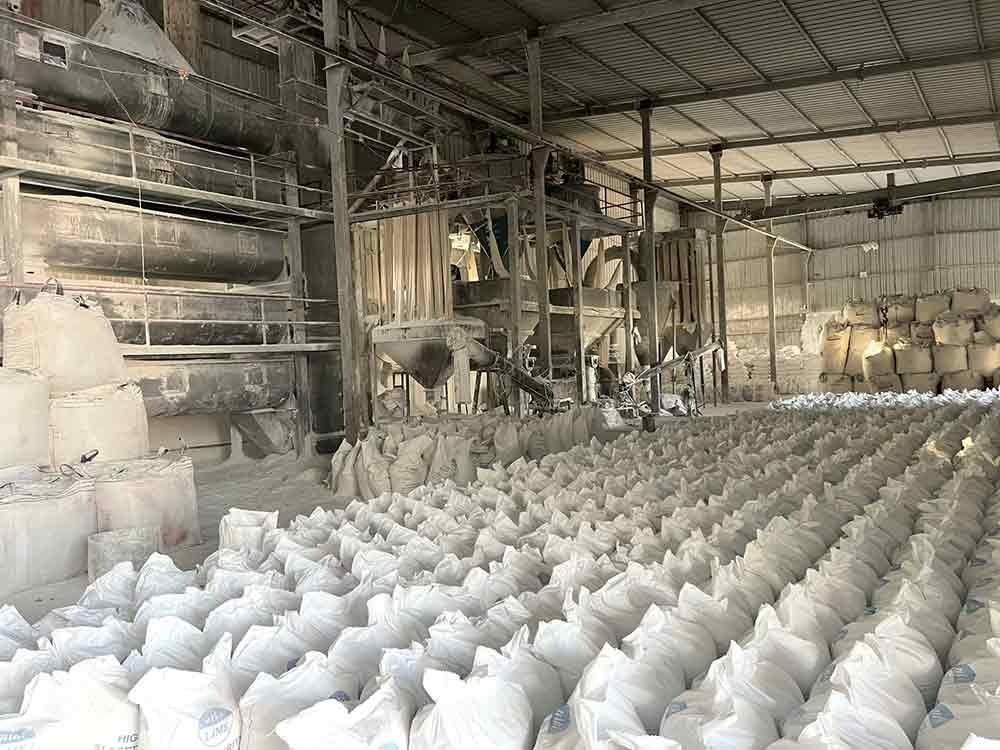


Gold mining relies on carefully controlled mineral-processing conditions to separate and recover valuable gold from ore. In these operations, quicklime is widely used to control alkalinity, support cyanidation, and maintain the chemical conditions required for efficient gold processing.
For mining operations, selecting consistent lime quality is as important as understanding its application. As a quicklime manufacturer, Synergy Chemical Industries supports industrial requirements where product chemistry, reactivity, and reliable supply are important for process control.
Why Is Lime Important in Gold Mining?
Lime helps maintain the alkaline conditions required during several stages of gold processing, particularly cyanide-based leaching. Its primary function is not to extract gold directly but to create and maintain suitable chemical conditions for the extraction process.
When quicklime (CaO) comes into contact with water, it hydrates to form calcium hydroxide [Ca(OH)₂]. This hydrated form provides alkalinity and can be used to adjust and maintain the pH of mineral slurries and process solutions.
The required quantity varies according to ore characteristics, process water chemistry, mineralogy, and the overall processing flow sheet. Therefore, lime dosage should be determined through process testing rather than applying one fixed dosage to every gold operation.
How Is Quicklime Used in Gold Mineral Processing?
Quicklime can be introduced at different points depending on the type of gold-processing circuit. In some operations, dry quicklime is added to crushed ore or mill feed, while other plants first slake the material and dose it as a calcium hydroxide slurry for more controlled pH adjustment.
In cyanidation circuits, maintaining an alkaline environment is particularly important because cyanide chemistry is strongly influenced by pH. Adequate alkalinity helps favour the cyanide species required for gold leaching while reducing the potential for hydrogen cyanide formation at lower pH conditions.
Key Uses of Quicklime in Gold Processing
The role of lime extends beyond simply increasing pH. Its application depends on the mineral-processing route and the chemistry of the ore and process water.
| Application | Role of Quicklime |
| pH control | Maintains the required alkaline process conditions |
| Cyanidation | Supports suitable conditions for cyanide-based gold leaching |
| Neutralization | Helps neutralize acidic process streams |
| Ore preparation | Can be added during milling or before heap leaching |
| Process control | Helps maintain consistent chemical conditions |
These functions explain why lime consumption can vary significantly between gold-processing plants. Ore mineralogy, acid-consuming components, water chemistry, reagent properties, and process configuration can all influence the amount required.
Quicklime in Gold Cyanidation

Cyanidation is a key stage in gold processing where lime helps maintain the alkaline conditions needed for controlled gold dissolution. By regulating pH, Quicklime supports suitable cyanide chemistry and helps the leaching circuit operate safely and consistently.
The required lime dosage depends on factors such as ore characteristics, process-water chemistry, reagent properties, and the processing method. Therefore, adding more lime does not necessarily improve gold recovery; the objective is to maintain the required pH while avoiding unnecessary reagent consumption.
Quicklime in Heap Leaching

Heap-leaching operations can also use quicklime to establish alkaline conditions before or during cyanide leaching. Dry quicklime may be metered onto ore through conveying or stacking systems before the ore is placed on the leach pad.
However, distribution is an important consideration. Uneven lime distribution can create differences in local pH, which is why the addition method, particle characteristics and ore preparation need to be considered when designing the process.
What Should Mines Consider When Buying Quicklime?
The performance of quicklime depends on more than its name or nominal grade. Mining companies should evaluate the material against their actual process requirements.
Important factors include:
- Available CaO: Indicates the calcium oxide contribution.
- Reactivity: Influences how quickly the material hydrates.
- Particle size: Affects handling, dispersion and slaking behaviour.
- Moisture content: Can affect storage, flow and dosing.
- Consistency: Stable product quality supports predictable process control.
- Supply reliability: Consistent availability is important for continuous operations.
The appropriate specification should ultimately be established according to the mine’s process chemistry and operating conditions rather than relying on a generic specification.
Why Choose the Right Quick lime Manufacturer?
A reliable quick lime manufacturer should be able to provide material with consistent chemical and physical characteristics suited to the intended application. For gold-processing operations, consistency matters because changes in lime quality can affect slaking behaviour, dosing requirements, and pH control.
Synergy Chemical Industries can work with industrial buyers to understand their lime requirements and identify suitable product specifications for their applications. This approach allows procurement decisions to consider both product quality and the practical requirements of the process.
Why Quicklime Matters in Gold Processing
Quicklime plays an important role in gold processing by helping maintain the alkaline conditions required for cyanidation, heap leaching and other mineral-processing applications. Its performance depends on consistent quality, proper preparation and controlled dosage according to the specific process requirements.
For mining companies sourcing from a Quick Lime Manufacturer, product consistency and application suitability are essential. Synergy Chemical Industries provides Quicklime solutions for industrial requirements, helping buyers select products suited to their processing needs.
FAQs
Q1. What is quicklime used for in gold mining?
Answer: Quicklime is mainly used to control pH and provide alkaline conditions in gold-processing operations, particularly cyanidation and some heap-leaching processes.
Q2. Why is lime added during gold cyanidation?
Answer: Lime is added to maintain the alkaline conditions needed for effective cyanide leaching and to help control cyanide chemistry within the processing circuit.
Q3. How does quicklime control pH in gold processing?
Answer: Quicklime reacts with water to form calcium hydroxide, which provides alkalinity and raises the pH of mineral slurries or process solutions.
Q4. Does adding more quicklime always improve gold recovery?
Answer: No. Lime dosage must match the ore, water chemistry and processing conditions. Excessive addition can increase reagent consumption without necessarily improving recovery.
Q5. How should a gold mine choose a quicklime manufacturer?
Answer: Mines should evaluate CaO content, reactivity, particle size, moisture, batch consistency, supply reliability, and the supplier’s ability to meet the specific requirements of the processing operation.