
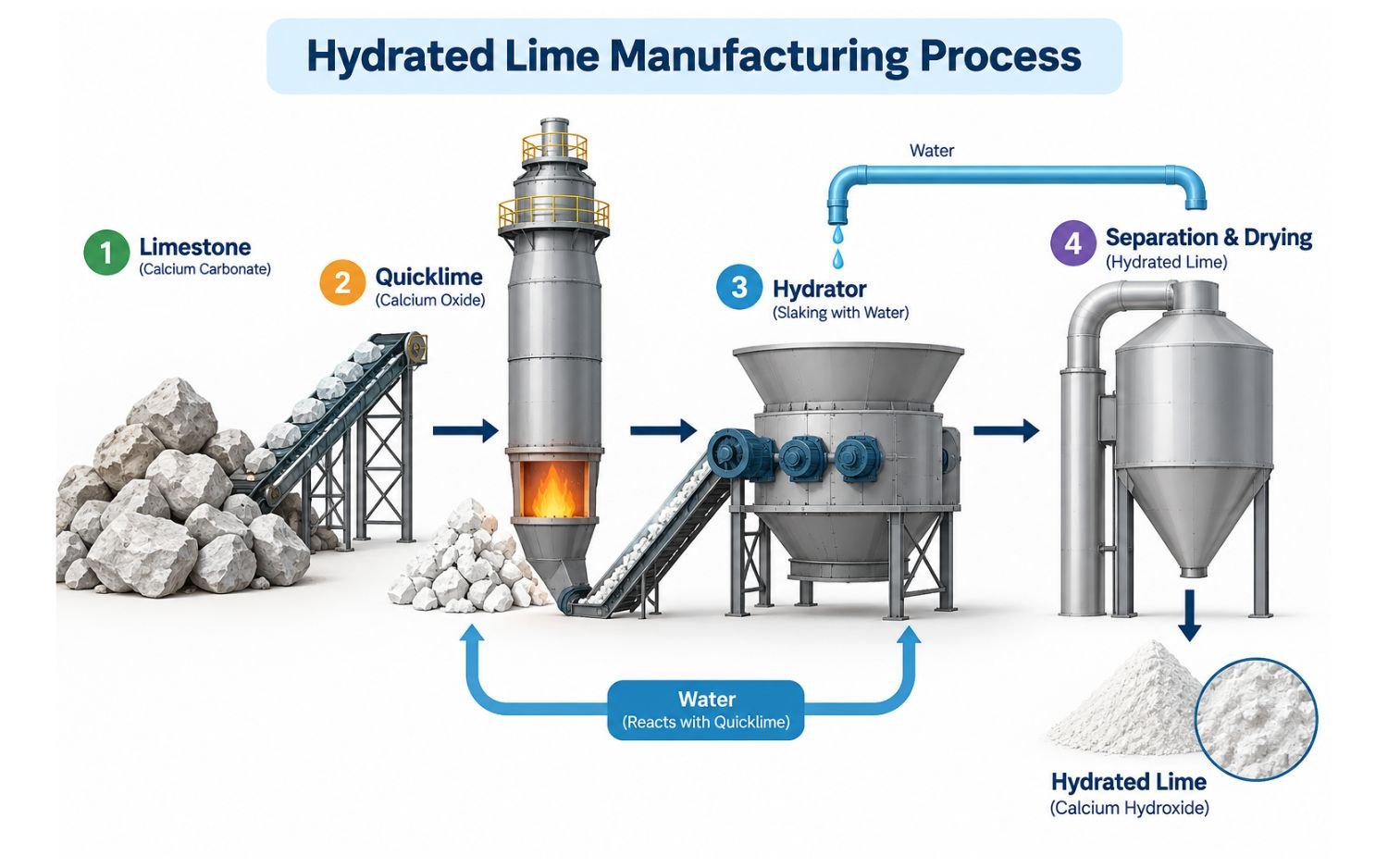
In industrial applications, hydrated lime is valued for its strong alkalinity, chemical reactivity, and versatility across construction, water treatment, chemical processing, and environmental applications. Understanding how hydrated lime is manufactured helps buyers assess product quality and select a suitable grade and supplier for their specific process requirements.
The hydrated lime manufacturing process begins with carefully selected limestone and controlled calcination, followed by the hydration of quicklime with water. At Synergy Chemical Industries, understanding these stages is essential for maintaining consistent material quality, particle characteristics, and performance across different industrial applications.
Limestone to Quicklime: Understanding Calcination
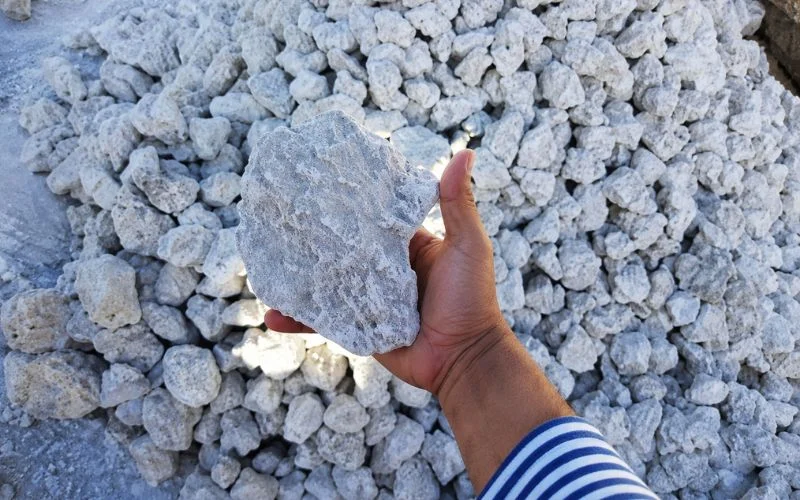
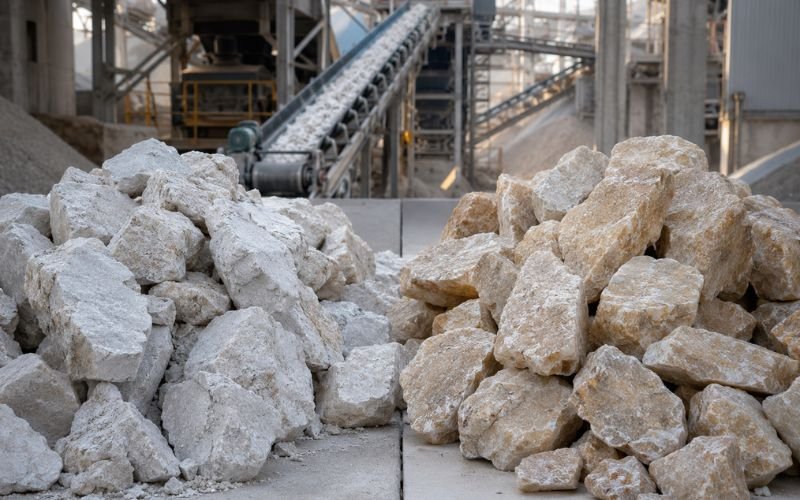
The manufacturing process starts with limestone, which primarily contains calcium carbonate (CaCO₃). The quality of the raw limestone directly influences the quality of the final lime, making raw-material selection an important part of production. Limestone is crushed and sized before calcination to support more uniform heat transfer and kiln operation.
Calcination and the Formation of Quicklime
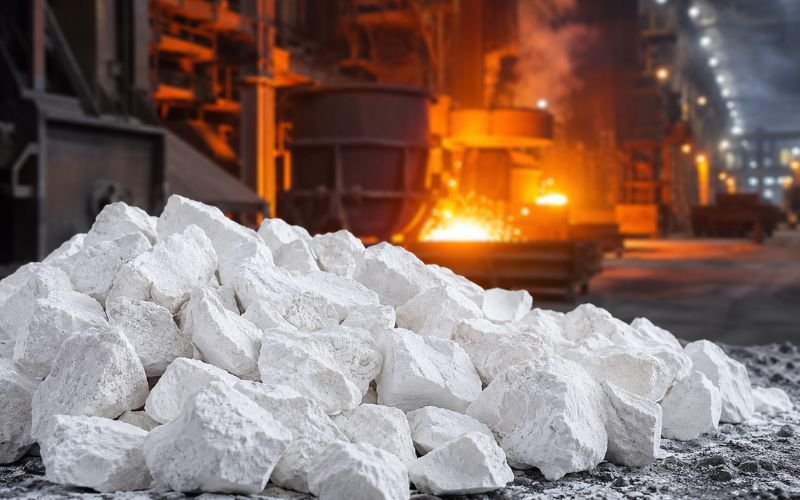
During calcination, prepared limestone is heated at a controlled high temperature in a lime kiln. The heat causes calcium carbonate to decompose into calcium oxide and carbon dioxide. The resulting calcium oxide is known as quicklime.
The basic chemical reaction is
CaCO₃ → CaO + CO₂
Proper control of kiln temperature, residence time, and material movement is important. Insufficient calcination can leave unreacted calcium carbonate in the product, while excessive thermal treatment can produce harder-burned quicklime with lower hydration reactivity. Controlled calcination therefore plays an important role in producing quicklime with consistent chemical composition and slaking behavior.
Hydrated Lime Manufacturing: The Hydration Process
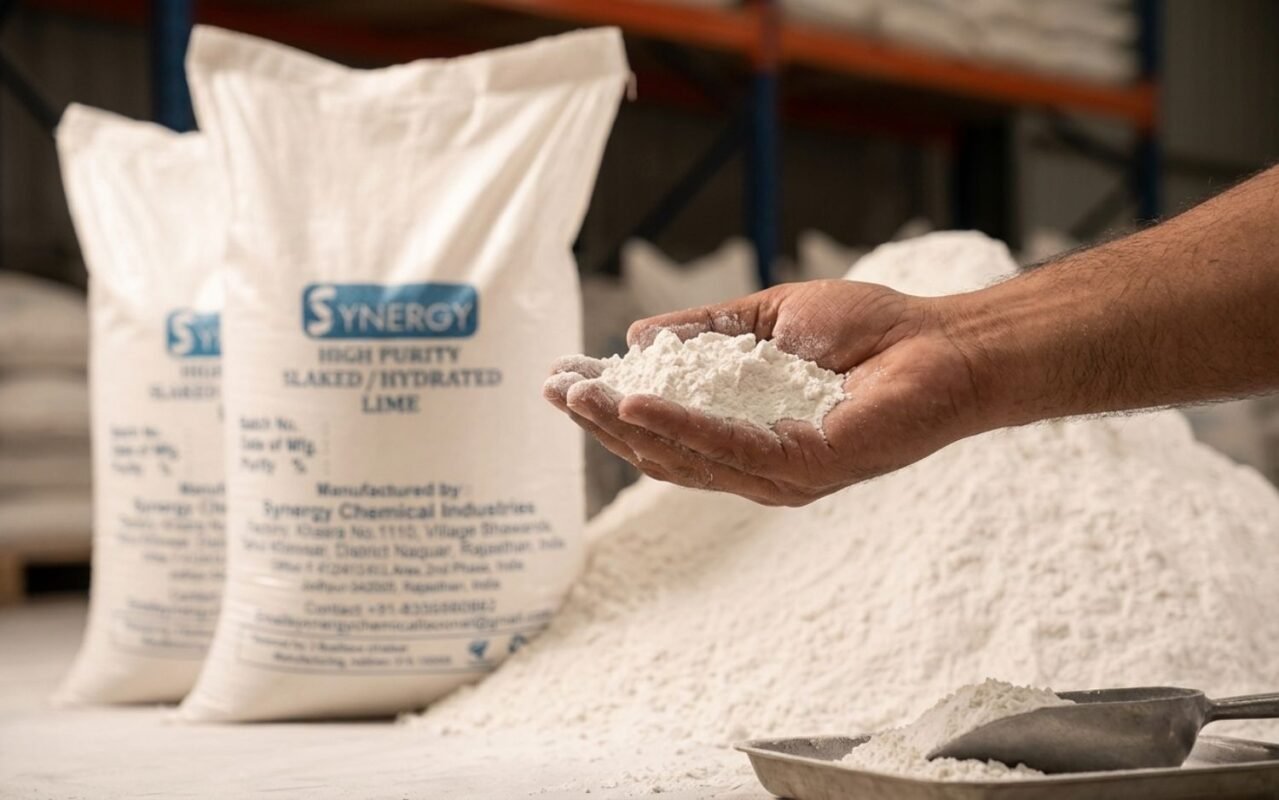
After calcination, the quicklime moves to the hydration stage. This is the defining step in hydrated lime manufacture, where calcium oxide reacts with a carefully controlled quantity of water to produce calcium hydroxide, commonly called hydrated lime.
The chemical reaction is
CaO + H₂O → Ca(OH)₂ + Heat
The reaction releases considerable heat, so water addition and process conditions must be carefully controlled. The objective is to hydrate the quicklime efficiently while achieving the desired physical and chemical characteristics of the finished product.
How Quicklime Reacts With Water
When water comes into contact with quicklime, the material undergoes an exothermic reaction. Calcium oxide reacts rapidly with water to form calcium hydroxide while releasing heat. Depending on the production system and intended application, the hydration process may be controlled through equipment designed to regulate water distribution, temperature, mixing, and residence time.
Consistent hydration is important because insufficiently hydrated material may contain residual quicklime, whereas uncontrolled hydration can affect product consistency. Industrial producers therefore monitor the reaction to achieve a stable and uniform product.
Controlling Temperature, Water, and Reaction Conditions
Water-to-lime ratio is an important production parameter. Too little water may prevent complete hydration, while excessive or poorly controlled water can influence handling and downstream processing.
Temperature management is equally important because hydration generates heat. Proper control helps create predictable product characteristics and supports efficient production. This is particularly relevant for industries that require reliable performance from hydrated lime batch after batch.
How Hydrated Lime Is Processed for Industrial Use
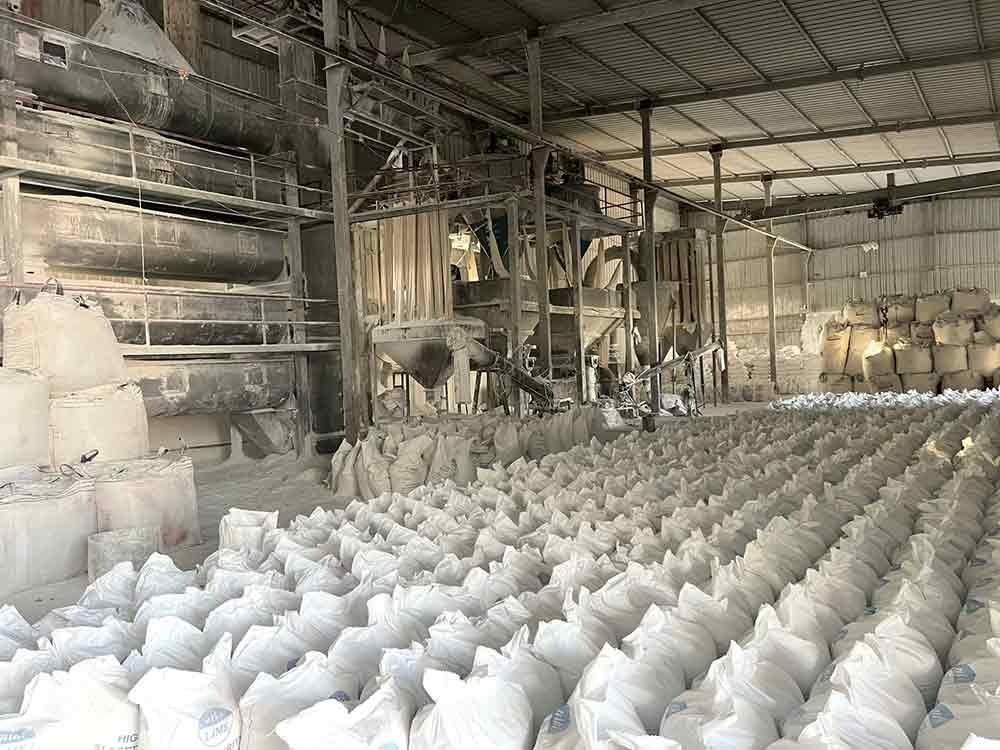
Once hydration is completed, the material can undergo further processing depending on the required specification. This may include separation, screening, grinding, or other handling processes designed to achieve the desired fineness and consistency.
Separation, Grinding, and Quality Control
Quality control typically focuses on chemical composition, available calcium hydroxide, fineness, moisture, and other application-specific parameters. The exact requirements can vary considerably between industries.
For buyers, these characteristics matter because hydrated lime is used in applications where predictable reactivity and consistency can directly affect process performance. A suitable specification should therefore be selected according to the end use rather than relying only on a generic product description.
What Determines Hydrated Lime Quality?
The quality of hydrated lime depends on several interconnected factors, beginning with the limestone used as the raw material. Calcination conditions influence the quality and reactivity of quicklime, while hydration conditions determine how effectively calcium oxide is converted into calcium hydroxide.
For industrial users, important considerations can include:
- Chemical composition and calcium hydroxide content
- Fineness and particle-size characteristics
- Moisture level
- Consistency and application-specific performance
- Packaging and storage conditions
- Suitability for the intended application
These factors make manufacturing controls particularly important when sourcing material for regular industrial consumption.
Choosing Reliable Hydrated Lime Suppliers
Selecting among hydrated lime suppliers should involve more than comparing prices. Buyers should consider product specifications, consistency, technical support, packaging options, supply capability, and the supplier’s understanding of the intended application. Chemical industries provide lime solutions with attention to the specific requirements of industrial users, helping businesses make informed sourcing decisions.
A supplier that clearly communicates product characteristics and manufacturing controls can make procurement easier, particularly where lime quality affects production efficiency or treatment performance. Businesses should discuss their application requirements with Synergy Chemical Industries before finalizing a product specification to identify a suitable grade and reduce the risk of selecting material that does not match their process requirements.
Synergy Chemical Industries: Trusted Lime Solutions
If your business requires consistent hydrated lime for industrial or commercial applications, Synergy Chemical Industries can be considered as a sourcing partner for your lime requirements. Discussing your application, required specifications, quantity, and packaging needs can help determine the appropriate product for your operation.
Looking for a dependable hydrated lime supplier? Contact Synergy Chemical Industries to discuss your requirements and product specifications.
Frequently Asked Questions
Q1. How is hydrated lime manufactured?
Answer: Hydrated lime is manufactured by first calcining limestone to produce quicklime (calcium oxide). The quicklime is then reacted with a controlled amount of water, producing calcium hydroxide, or hydrated lime.
Q2. What is the difference between quicklime and hydrated lime?
Answer: Quicklime is primarily calcium oxide (CaO), produced through limestone calcination. Hydrated lime is calcium hydroxide (Ca(OH)₂), produced when quicklime reacts with water.
Q3. Why is temperature control important during hydrated lime manufacture?
Answer: Hydration is an exothermic reaction that releases heat. Controlling temperature and water addition helps achieve consistent hydration and predictable product characteristics.
Q4. What factors affect hydrated lime quality?
Answer: Raw limestone quality, calcination conditions, quicklime reactivity, water control, hydration efficiency, fineness, and quality-control procedures can all affect the final hydrated lime quality.
Q5. How should I choose hydrated lime suppliers?
Answer: Consider chemical specifications, product consistency, application suitability, supply capacity, packaging, technical support, and the supplier’s ability to meet your required specifications. Where appropriate, buyers should also review the supplier’s technical data sheet or certificate of analysis.