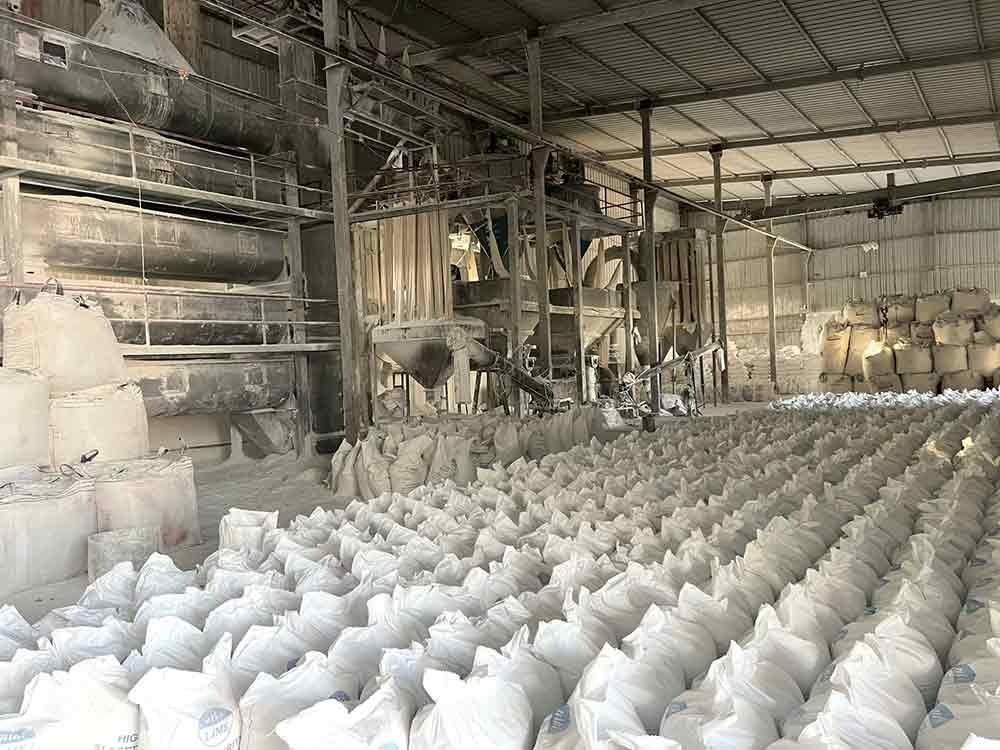

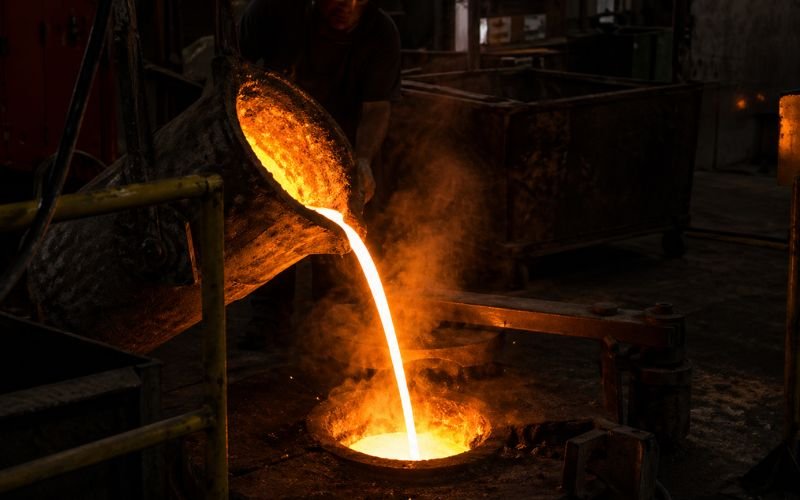
Quicklime in steel manufacturing is used as a critical fluxing material to support slag formation, remove impurities, improve desulfurisation, and enhance steel quality. In both basic oxygen furnace (BOF) and electric arc furnace (EAF) operations, quicklime plays a direct role in refining efficiency, refractory protection, and operational performance.
What is Quicklime and Why is it Used in Steel Manufacturing
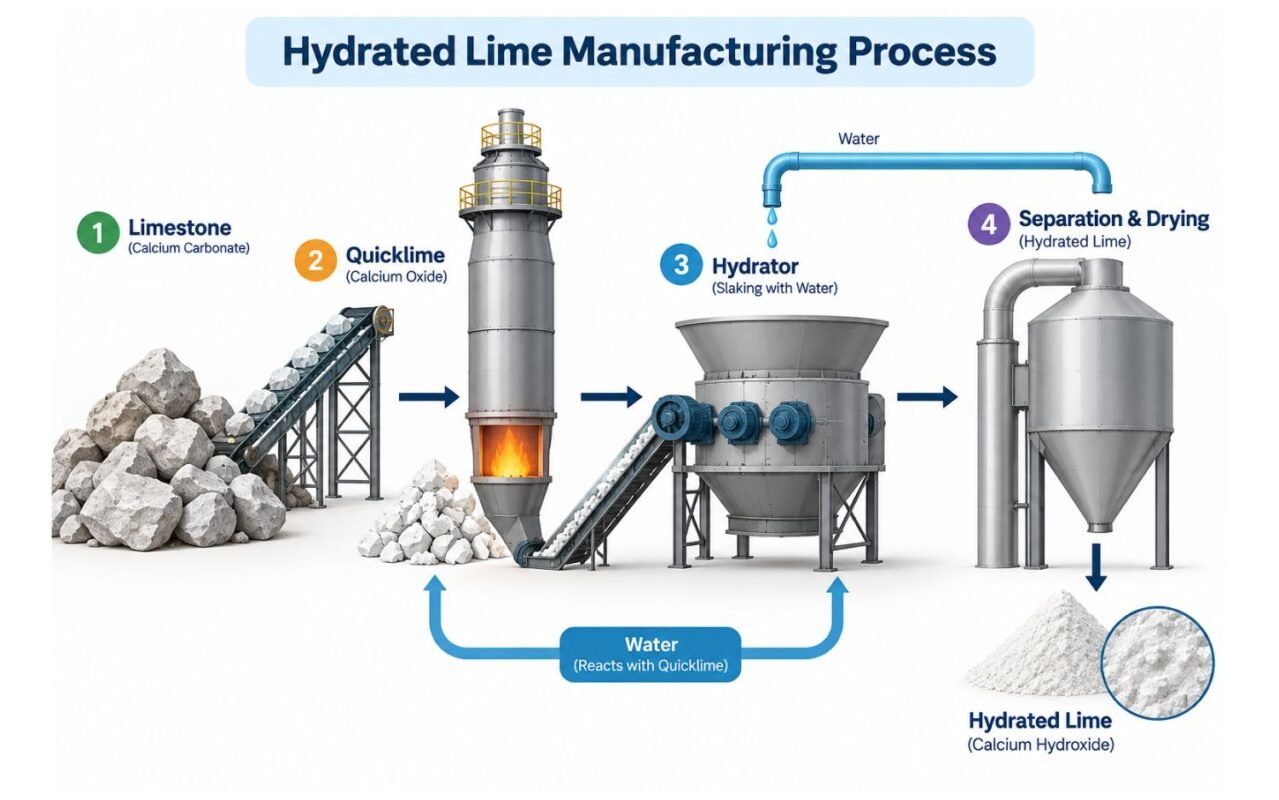
Quicklime, or calcium oxide (CaO), is produced by calcining high-grade limestone and is widely used in steel production as a metallurgical flux. Its main function is to react with impurities such as silica, sulphur, and phosphorus to form slag, which can then be separated from molten steel. This refining action makes quicklime indispensable in modern steelmaking.
The role of quicklime in steelmaking goes beyond impurity removal. It helps control slag chemistry, supports decarburisation, protects refractory linings, and improves the efficiency of downstream refining processes. Because of its strong basicity and chemical reactivity, high-purity quicklime is preferred in demanding steel applications.
Role of Quicklime in the Steelmaking Process
In BOF steelmaking, quicklime is added during oxygen blowing to create a basic slag capable of absorbing oxidised impurities. This is especially important for phosphorus removal and producing cleaner steel grades. A well-balanced slag system supported by reactive lime improves refining kinetics and reduces refractory wear.
In EAF steelmaking, quicklime supports foamy slag practice, which stabilises the electric arc, improves thermal efficiency, and lowers energy losses. Scrap-based steelmaking often introduces variable chemistry, making quicklime for slag formation essential for process consistency.
Quicklime is also used during secondary metallurgy for desulphurisation and inclusion control. This broad use across furnace and ladle refining explains why lime in steel manufacturing process design is considered a core metallurgical input.
How Quicklime Supports Slag Formation and Impurity Removal
Slag chemistry is central to steel refining, and quicklime is one of its most important components. As a fluxing agent, it reacts with acidic oxides and impurity compounds to form a basic slag capable of absorbing unwanted elements.
This process supports:
- Phosphorus and sulfur removal from molten steel
- Slag conditioning, refractory protection, and cleaner steel production
Quicklime for slag formation also helps regulate slag fluidity and basicity. Poor-quality lime can lead to unstable refining conditions, excess slag generation, and reduced steel yield. This is why steel producers closely monitor lime purity, reactivity, and sizing.
Applications of Quicklime in Steel Manufacturing
Quicklime uses in steel industry operations extend across multiple stages. In primary steelmaking, it functions as a refining flux. In EAF operations, it supports foamy slag and furnace efficiency. During secondary metallurgy, it improves desulfurisation and steel cleanliness.
Industrial quicklime applications also include sinter plants, foundries, and speciality steel production, where impurity control is critical. In all these cases, calcium oxide in steel production contributes to both metallurgical quality and process economics.
Key Benefits of Using High-Quality Quicklime in Steel Plants
The benefits of quicklime in metallurgy are closely tied to steel quality and operating efficiency. High-quality quicklime improves slag reactivity, lowers impurity levels, and reduces refining time.
Steel plants benefit through improved sulphur and phosphorus control, better metal recovery, and longer refractory life. In EAF operations, disciplined lime practice can also reduce power consumption and stabilise melting.
Using lower-grade lime may reduce purchase cost but often increases total process cost through higher consumption, unstable slag chemistry, and lower productivity. This is why high purity quicklime is preferred for demanding steel operations.
Quicklime Manufacturing Grades and Quality Parameters for Steel Use
Not all quicklime grades are suitable for steel plants. Metallurgical lime is typically selected based on available CaO content, reactivity, particle size, and impurity levels.
Steel producers often look for high purity quicklime with low silica and low residual CO₂ because these factors influence slag performance and refining efficiency. Reactivity is particularly important, as fast-dissolving lime contributes earlier to slag development.
An experienced quicklime manufacturer in Rajasthan serving steel producers is often evaluated not only on product chemistry but on consistency, technical support, and supply reliability. This is where suppliers such as Synergy Chemical Industries are often valued in industrial procurement.
Process Flow: How Quicklime is Used During Steel Production
Quicklime is introduced in stages throughout steelmaking. It may be charged early into BOF or EAF furnaces to support initial slag formation. As refining progresses, additional lime may be added to maintain target basicity and improve impurity removal.
During active refining, quicklime supports phosphorus removal, desulfurisation, and slag control. In EAF operations, it also helps maintain foamy slag conditions for improved furnace performance.
During secondary refining, lime may continue to support sulphur reduction and steel cleanliness targets. Its role is therefore continuous, not limited to a single reaction stage.
Challenges Solved by Quicklime in Modern Steelmaking
Modern steel plants face challenges such as raw material variability, stricter quality requirements, and pressure to improve efficiency. Quicklime helps address these through reliable slag chemistry and stronger refining performance.
It supports cleaner steel production, lowers refractory wear, improves impurity control, and contributes to energy efficiency. For many plants, the role of quicklime in steelmaking is closely tied to both productivity and quality assurance.
Choosing the Right Quicklime Supplier for Steel Manufacturing
Choosing a quicklime supplier for steel plants involves more than comparing price. Consistency in purity, reactivity, and particle sizing has direct effects on furnace performance.
A reliable supplier should provide stable quality, technical understanding of metallurgical lime applications, and dependable supply. For industrial buyers, sourcing from an experienced supplier like Synergy Chemical Industries can support both process reliability and procurement confidence.
Why High Purity Quicklime Matters for Operational Efficiency
High purity quicklime improves refining efficiency because fewer impurities are introduced into the process. Lower silica content means more effective CaO is available for slag chemistry, reducing lime consumption and improving steel yield.
Operational benefits often include faster slag conditioning, improved desulfurization, lower slag volume, and better furnace stability. This is why calcium oxide in steel production is treated as a process performance material, not simply a commodity input.
Future Demand of Quicklime in Steel Industry
Demand for quicklime in steel manufacturing is expected to grow alongside steel production and tighter metallurgical standards. EAF growth, clean steel requirements, and efficiency-driven operations are increasing focus on higher-performing metallurgical lime.
Steel producers are also placing greater emphasis on optimising lime quality rather than increasing consumption, favouring experienced quicklime suppliers capable of meeting process-specific requirements.
Frequently Asked Questions
Q1. Why is quicklime used in steel manufacturing?
Answer: Quicklime is used as a fluxing agent to form slag, remove sulfur and phosphorus, improve steel refining, and protect furnace refractories.
Q2. How does quicklime remove impurities from steel?
Answer: Quicklime reacts with impurities and forms slag, which absorbs contaminants and separates them from molten steel.
Q3. What is the difference between lime and quicklime in metallurgy?
Answer: Quicklime refers specifically to calcium oxide used in refining, while lime can be a broader term that may include hydrated lime.
Q4. What grade of quicklime is best for steel plants?
Answer: High purity, reactive quicklime with low silica and controlled sizing is generally preferred for steelmaking.
Q5. Is quicklime used in BOF and EAF steelmaking?
Answer: Yes, quicklime is essential in both BOF and EAF processes for slag formation, desulfurisation, and refining.