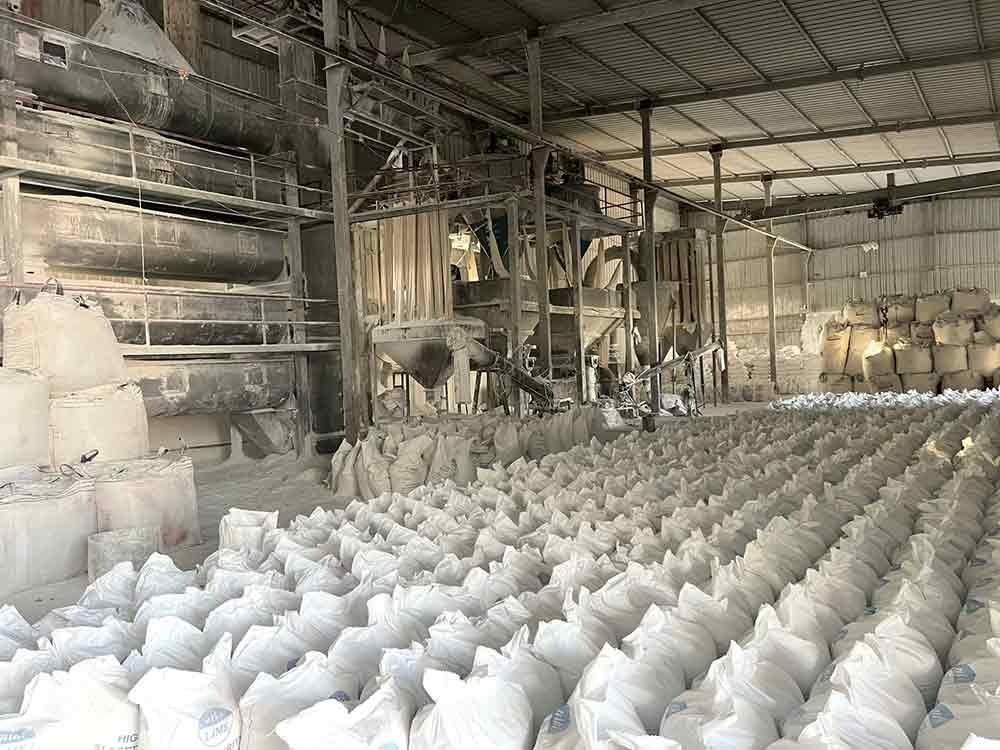


Across India, road performance often reflects the behaviour of the soil beneath it. Cracking surfaces, uneven settlement, and reduced lifespan are frequently linked to weak or moisture-sensitive subgrades. As infrastructure demands increase, the focus has shifted from surface materials to foundational strength. This is where hydrated lime in road construction becomes highly relevant.
Engineers and contractors rely on materials that not only improve strength but also respond well to local conditions such as expansive soils and seasonal rainfall. Hydrated lime offers a practical and tested approach to stabilising soil, improving durability, and supporting long term performance without excessive reliance on imported aggregates.
What is Hydrated Lime
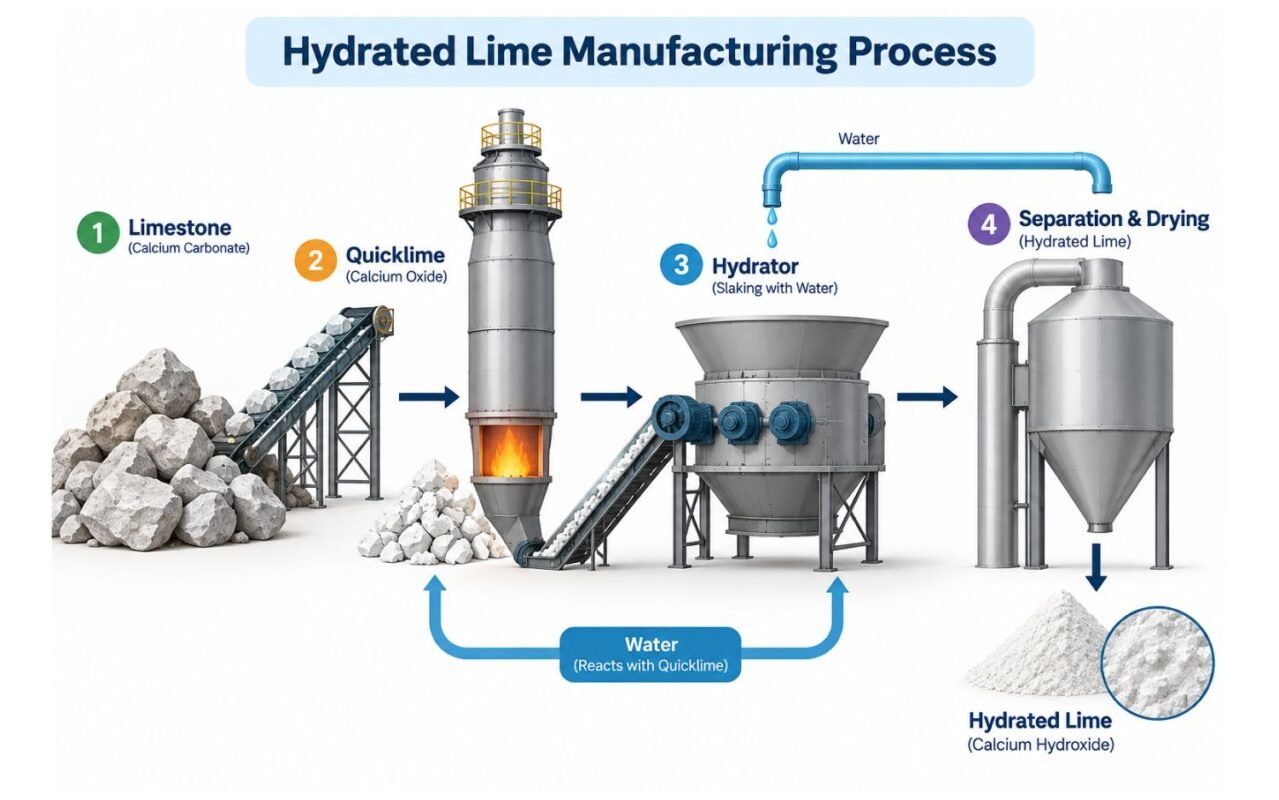
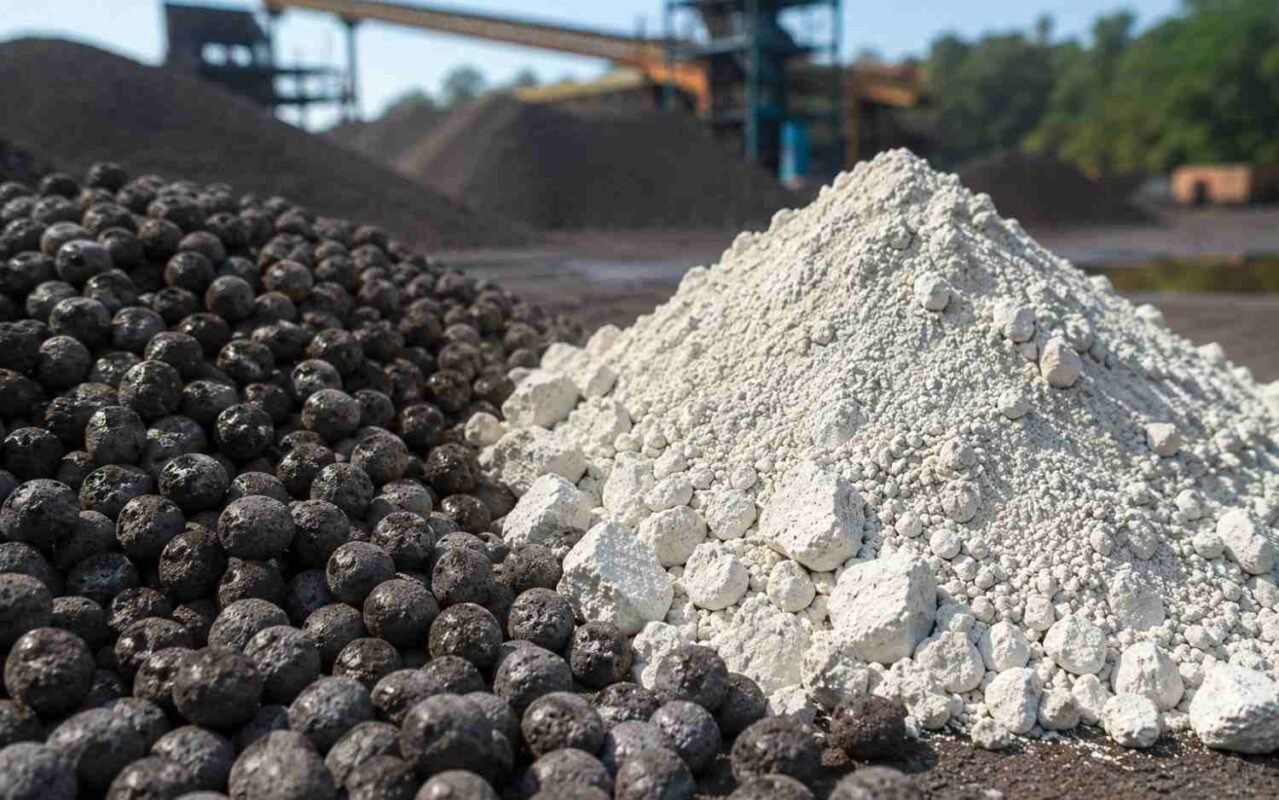
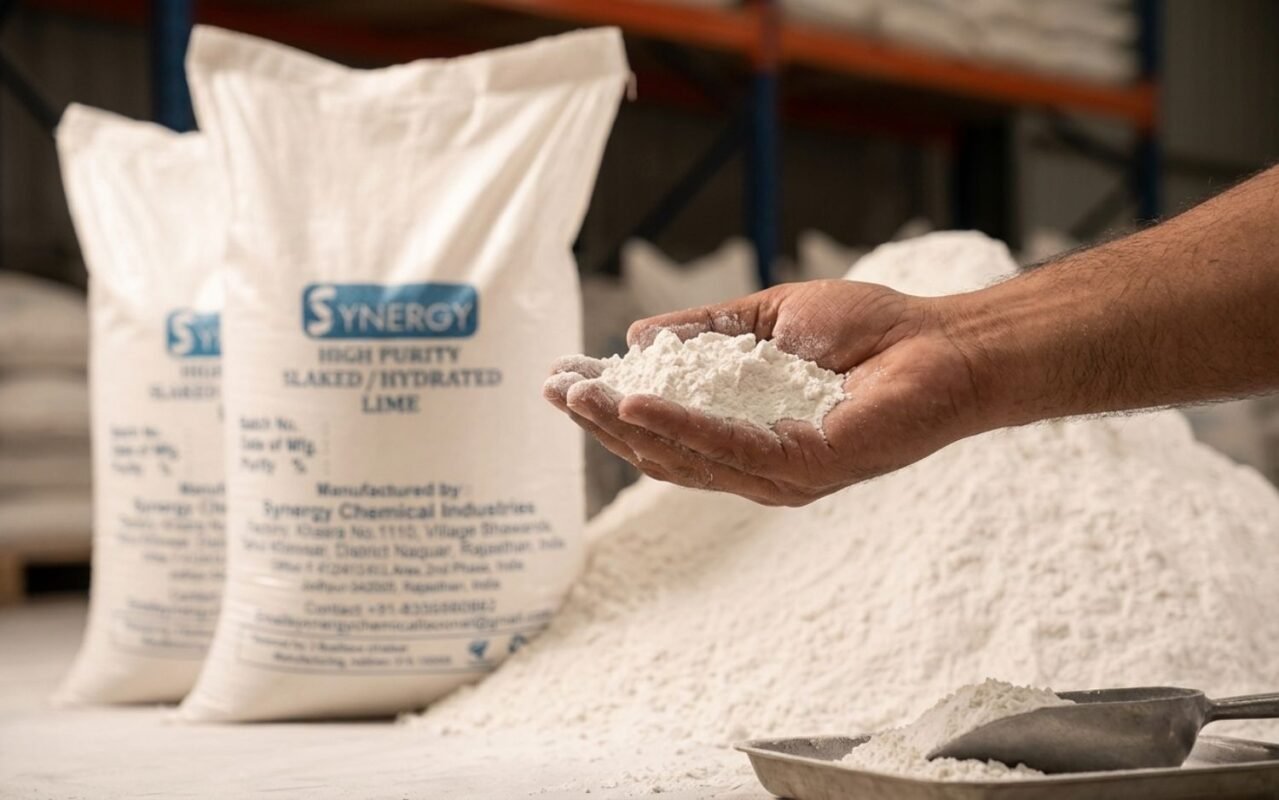
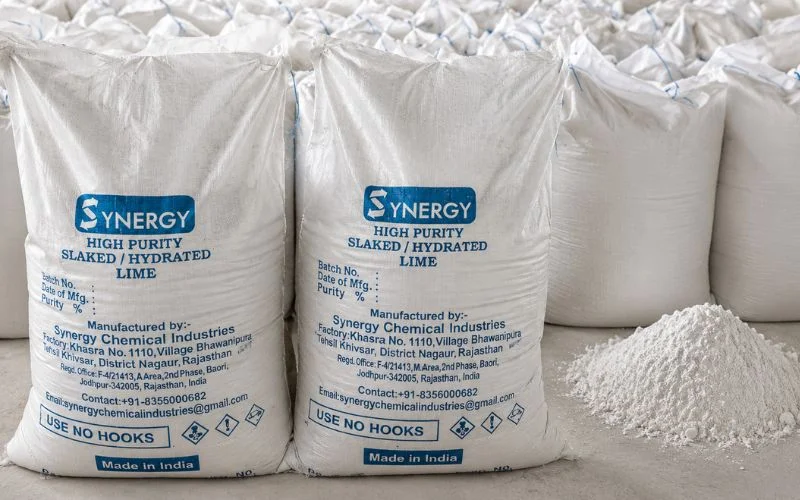
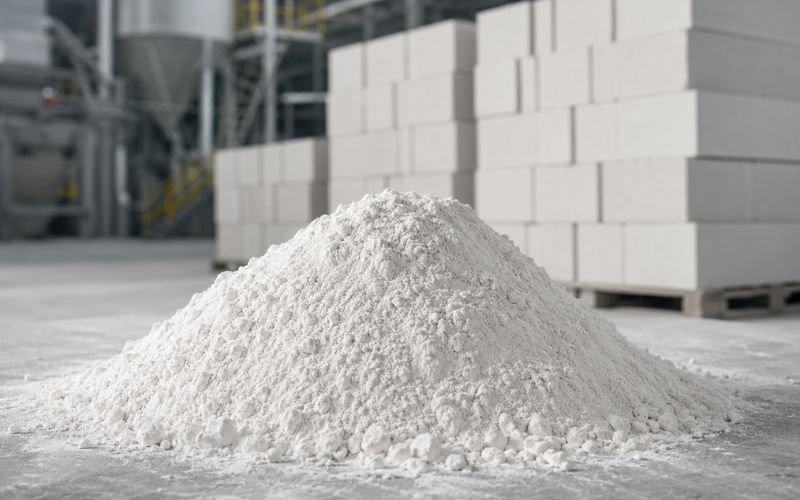
Hydrated lime, or calcium hydroxide, is produced when quicklime reacts with water in a controlled process. The result is a fine, dry powder with high chemical reactivity. This property makes it suitable for applications where interaction with soil minerals is required.
In construction, hydrated lime is primarily used for soil stabilisation. When mixed with soil, it modifies both the physical structure and chemical composition. These changes lead to improved strength, better workability, and reduced sensitivity to water.
Key characteristics include:
- High alkalinity that promotes chemical reactions
- Fine particle size for uniform mixing
- Strong affinity with clay minerals
These qualities allow hydrated lime to perform effectively across a wide range of soil types.
How Hydrated Lime Works in Road Construction
Initial Soil Modification
When hydrated lime is introduced into soil, the first stage involves rapid modification. Calcium ions replace weaker ions present in clay particles. This reduces plasticity and makes the soil less sticky and easier to handle.
This stage improves workability during construction and allows better compaction.
Flocculation and Aggregation
Following ion exchange, clay particles begin to group together. This process, known as flocculation, transforms the soil structure. Instead of behaving as a dense, cohesive mass, the soil becomes more granular.
This change improves:
- Compaction efficiency
- Load distribution
- Structural stability
Pozzolanic Reactions
Over time, hydrated lime reacts with silica and alumina present in the soil. These reactions form cementitious compounds that bind particles together.
This stage contributes to:
- Long term strength gain
- Increased resistance to deformation
- Improved durability under repeated loading
Role of Hydrated Lime in Road Construction
Strengthening the Subgrade
The subgrade serves as the foundation for all upper layers. Weak or unstable soil can compromise the entire structure. Hydrated lime strengthens the subgrade by improving its load bearing capacity.
This reduces the likelihood of rutting and surface deformation.
Controlling Soil Expansion
Certain soils, particularly black cotton soil, expand when wet and shrink when dry. This behaviour leads to cracks and structural instability. Hydrated lime reduces this expansion by altering the soil’s plasticity and moisture interaction.
Improving Moisture Resistance
Water penetration weakens untreated soil. Lime stabilisation reduces water absorption and helps maintain consistent strength even during heavy rainfall.
This is particularly valuable in regions affected by monsoon cycles.
Practical Applications in Indian Road Projects
Subgrade Stabilisation in High Plasticity Soils
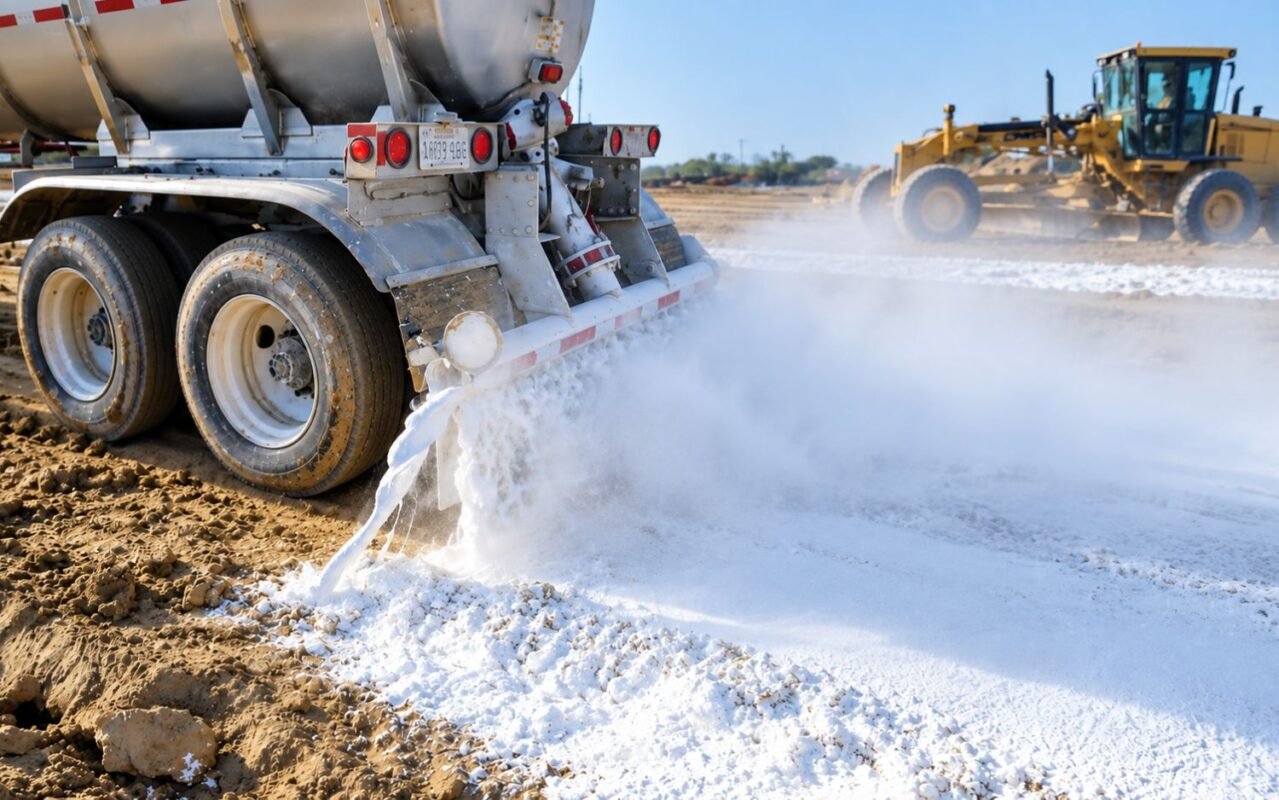
In many parts of India, soils contain a high percentage of clay. These soils show low strength and high deformation under load. Hydrated lime provides an effective method to improve their engineering properties.
Contractors typically add hydrated lime in controlled quantities, often between three and eight percent based on soil analysis. The mixture is then compacted to form a stable base layer.
Performance in Monsoon Conditions
Seasonal rainfall places additional stress on road structures. Lime treated soils retain strength even when exposed to moisture, reducing damage and maintenance requirements.
Use in Rural Infrastructure Development
Hydrated lime supports cost effective road construction in rural areas by enabling the use of locally available soil. This reduces dependency on imported materials while maintaining performance standards.
Application in Highway Construction
For highways and heavy traffic corridors, stabilised soil provides a reliable base that supports repeated loading. This contributes to longer service life and reduced repair cycles.
Key Benefits of Using Hydrated Lime
Improved Load Bearing Capacity
Lime stabilisation enhances soil strength, allowing it to support higher loads without excessive deformation.
Reduced Plasticity
Hydrated lime decreases the plastic nature of clay soils. This reduces shrinkage and swelling, leading to a more stable foundation.
Long Term Durability
The formation of cementitious compounds ensures that strength continues to develop over time. This results in durable road structures.
Resistance to Moisture
Lime treated soil shows reduced sensitivity to water. It maintains structural integrity under varying environmental conditions.
Efficient Use of Local Materials
Hydrated lime allows engineers to utilise existing soil rather than replacing it. This approach improves efficiency and reduces project costs.
Hydrated Lime Compared with Other Stabilisation Methods
Comparison with Cement
Cement stabilisation is effective for certain soil types, particularly granular soils. However, hydrated lime performs better in clay rich conditions.
Key differences include:
- Hydrated lime provides gradual strength gain and flexibility
- Cement offers rapid strength but may lead to rigidity
The choice depends on soil composition and project requirements.
Suitability Across Soil Types
Hydrated lime is particularly effective where soils show high plasticity or moisture sensitivity. It provides a balanced improvement in strength and durability.
Why Rajasthan Plays a Key Role in Hydrated Lime Supply
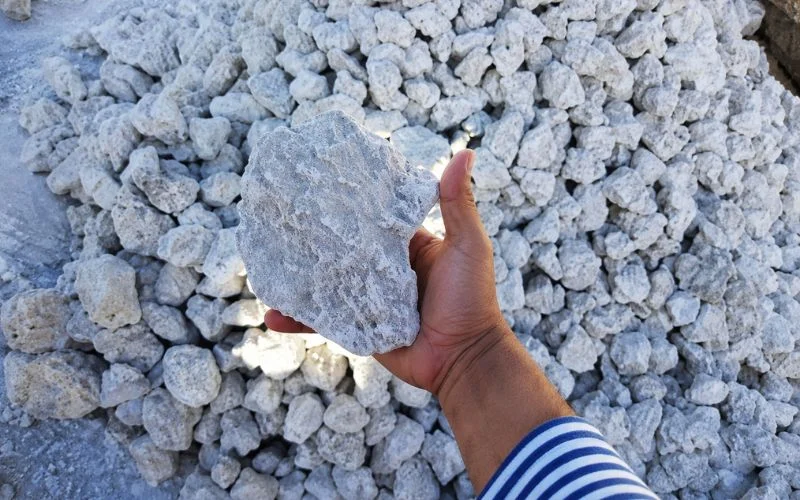
Rajasthan is known for its abundant limestone reserves, which support large scale lime production. Manufacturers in this region maintain consistent quality and supply capabilities.
This makes Rajasthan a preferred sourcing location for construction projects across India.
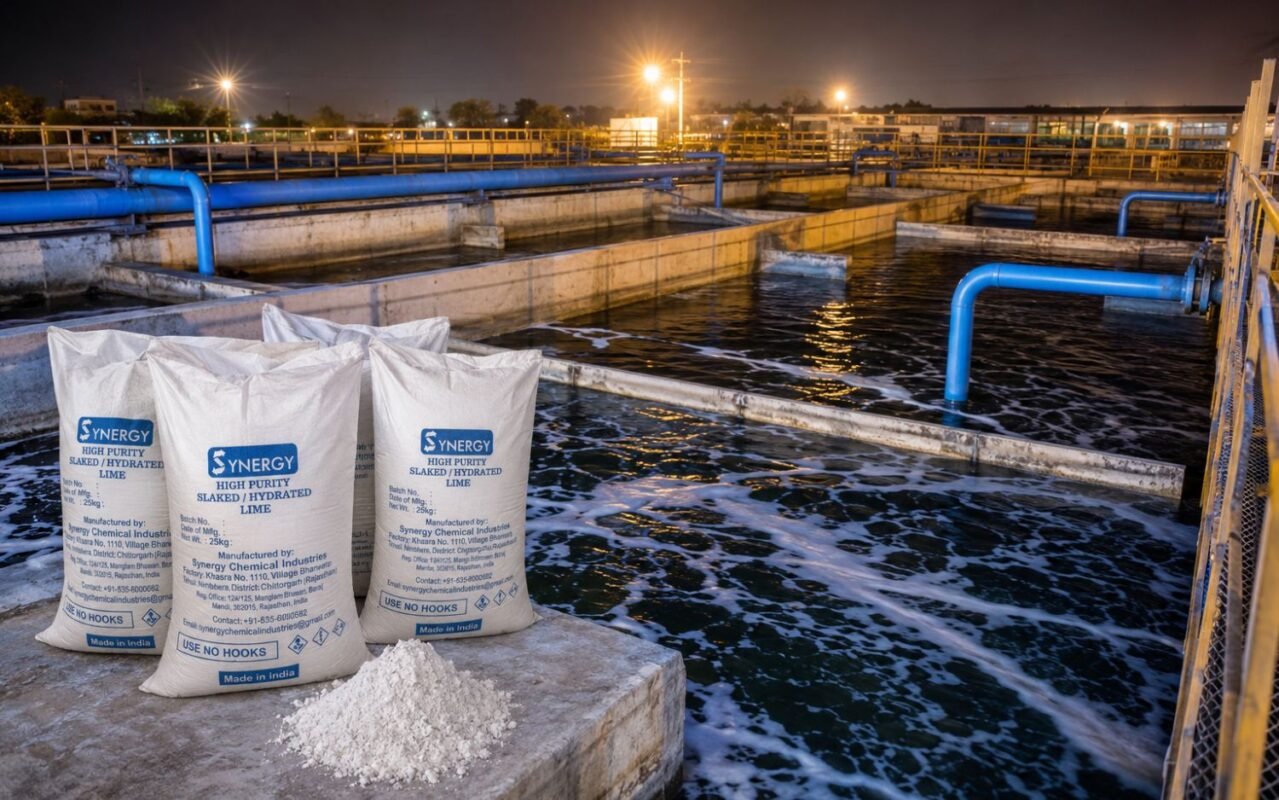
For businesses seeking hydrated lime manufacturers in Rajasthan, consistency in quality, production capacity, and logistics becomes a deciding factor. Suppliers such as Synergy Chemical focus on maintaining these standards while supporting infrastructure development needs.
Selecting the Right Hydrated Lime Supplier
Material quality directly influences construction outcomes. Choosing a reliable supplier ensures consistent performance and reduces project risks.
Important considerations include:
- Purity and chemical composition
- Consistency across batches
- Manufacturing processes and quality control
- Ability to handle bulk supply requirements
- Timely delivery and logistical support
Working with an experienced supplier helps maintain uniformity across large projects.
Environmental and Economic Considerations
Supporting Sustainable Construction
Hydrated lime contributes to sustainable practices by allowing the use of in situ soil. This reduces the need for quarrying and transportation of aggregates.
Reducing Lifecycle Costs
Although stabilisation requires careful planning, it leads to lower maintenance costs over time. Roads built on stabilised soil tend to perform more reliably.
Lower Transportation Impact
Using locally available materials reduces transportation needs, which helps control costs and environmental impact.
Building Roads That Last Longer
Road performance depends on decisions made at the foundation level. Strengthening soil with the right material can significantly influence durability, maintenance cycles, and overall cost efficiency.
Hydrated lime continues to support modern road construction by improving soil behaviour and enabling better use of available resources. Its role extends beyond stabilisation, contributing to more reliable and sustainable infrastructure.
For contractors and developers aiming to improve project outcomes, sourcing consistent quality material from experienced hydrated lime manufacturers in Rajasthan remains an important step in achieving long term performance.
Frequently Asked Questions
Q1. What is the role of hydrated lime in road construction
Hydrated lime improves soil strength, reduces plasticity, and enhances resistance to moisture, making it suitable for stabilising road foundations.
Q2. How does hydrated lime improve soil strength
It reacts with clay minerals to form binding compounds that increase load bearing capacity over time.
Q3. What percentage of hydrated lime is typically used
The required percentage generally ranges from three to eight percent, depending on soil characteristics.
Q4. Is hydrated lime suitable for all soil types
It works best with clay rich soils and soils that show high plasticity.
Q5. Why is hydrated lime widely used in India
It addresses challenges related to expansive soils and seasonal moisture variation, which are common across many regions.
Q6. Where can I source hydrated lime for construction projects
Regions such as Rajasthan offer reliable supply due to strong limestone availability and established manufacturing infrastructure.