
AAC block manufacturing depends on carefully controlled raw materials, and quicklime is one of the most important components in the mix. While calcium oxide (CaO) content often receives attention when manufacturers compare products, another property deserves equal consideration: quicklime reactivity.
Quicklime reacts with water to form calcium hydroxide and release heat:
CaO + H₂O → Ca(OH)₂ + heat
The rate and consistency of this reaction can influence the conditions within the AAC slurry and, consequently, the timing and control of different production stages. For AAC manufacturers, the objective is not simply to find the most reactive quicklime available. It is to source consistent quicklime with characteristics that suit the plant’s formulation and operating conditions.
What Is Quicklime and Why Is It Used in AAC Blocks?
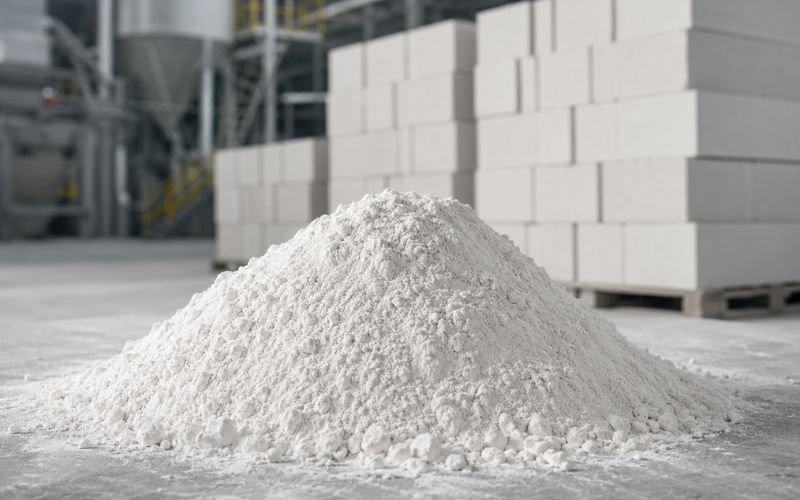
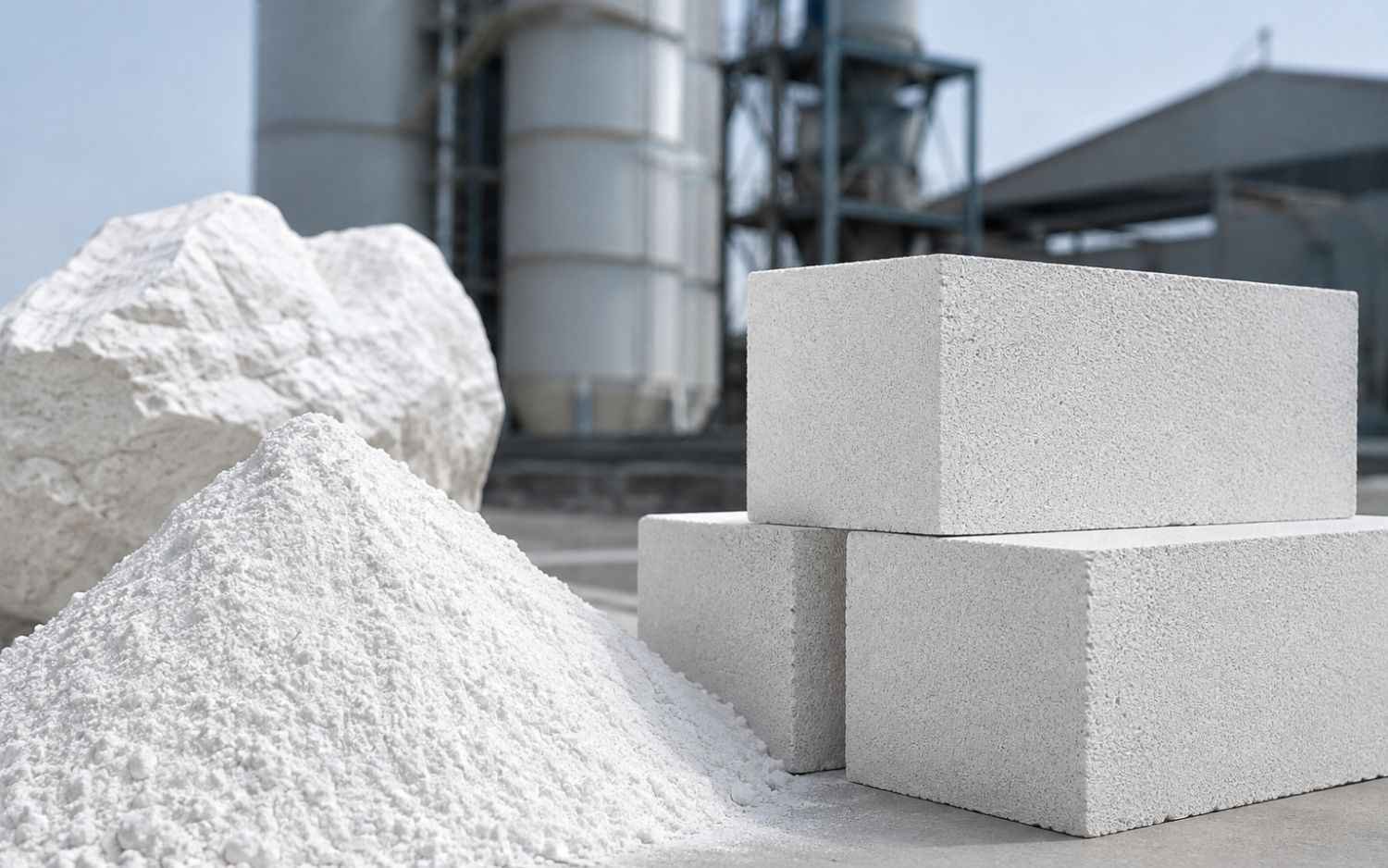
Quicklime is primarily calcium oxide, produced by heating limestone at high temperature. It is available as lumps, granules or pulverised powder.
In AAC manufacturing, quicklime forms part of the raw-material system alongside materials such as cement, silica-rich material, gypsum or anhydrite where applicable, aluminium powder or paste and water.
The quality of quicklime can influence how consistently this system behaves. Important characteristics for manufacturers to consider include:
- CaO content
- Reactivity
- Particle size
- Moisture
- Impurities
- Batch-to-batch consistency
A suitable quicklime product should therefore provide predictable behaviour rather than simply meet one headline specification.
Why Does Quicklime Reactivity Matter in AAC Manufacturing?
Quicklime reactivity describes how readily calcium oxide reacts with water under defined testing conditions. The reaction produces calcium hydroxide and releases heat.
For an AAC manufacturer, the rate of this reaction matters because the production process operates within controlled mixing, temperature, and timing conditions.
Changes in quicklime reaction behaviour may affect:
- Slurry temperature development
- Hydration behaviour
- Process timing
- Green-cake formation
- Cutting conditions
- Overall production consistency
However, quicklime reactivity should not be viewed in isolation. AAC quality depends on the complete formulation and process, including cement, silica, aluminum, water, mixing, casting, cutting, and autoclaving.
Is Higher Reactivity Always Better?
Not necessarily.
A higher reactivity value does not automatically mean better AAC performance. The appropriate reaction behaviour depends on the manufacturer’s formulation, equipment and operating conditions.
For this reason, AAC manufacturers should focus on consistent and suitable reactivity, supported by a clearly defined test method, rather than selecting a product simply because it has the highest reported reactivity.
How Can Quicklime Reactivity Affect AAC Block Quality?
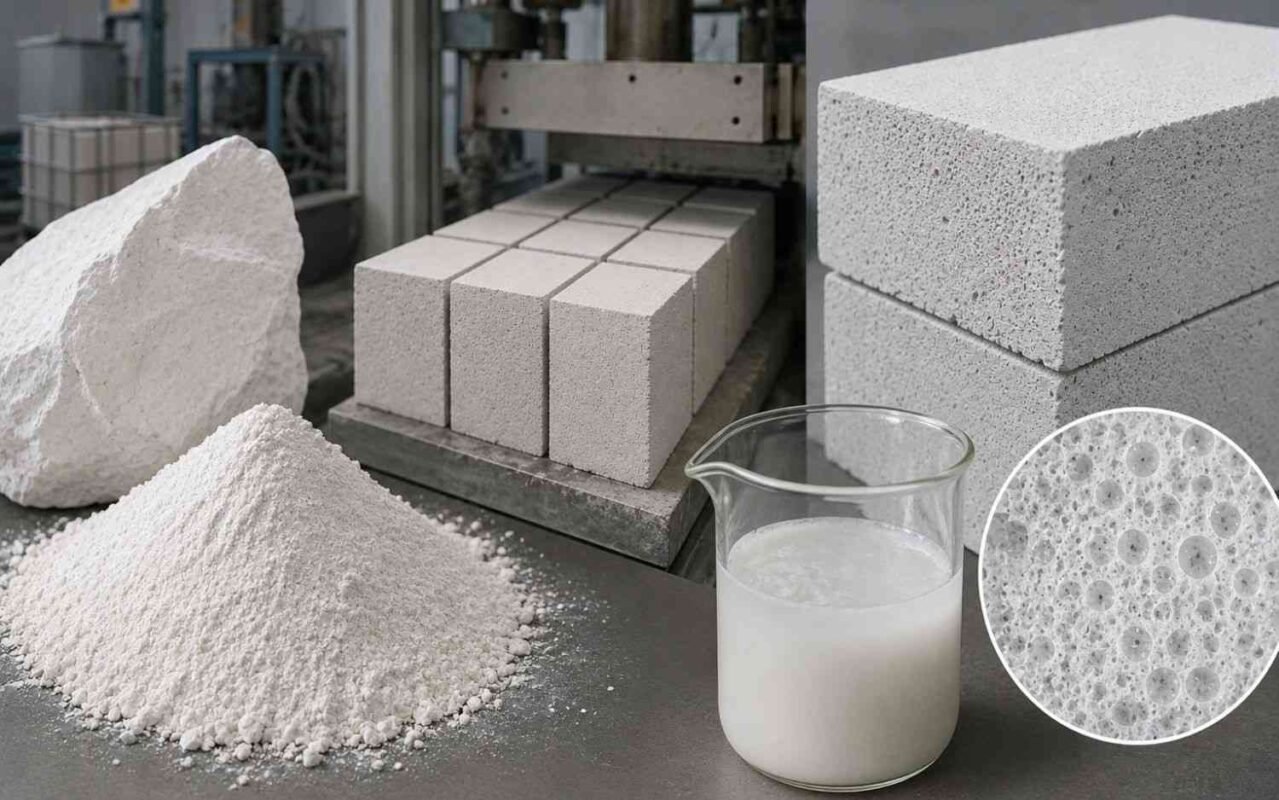
Quicklime does not directly create the pores in AAC blocks. The cellular structure develops through controlled aeration, including the reaction of aluminum powder or paste within the alkaline AAC mixture.
However, quicklime hydration forms part of the chemical and thermal conditions in which this process takes place.
Consistent quicklime behaviour can therefore contribute to more predictable slurry conditions and process timing.
This can be particularly relevant during green-cake formation and cutting. If the material develops differently from one batch to another, manufacturers may need to make process adjustments to maintain the intended cutting window.
Final AAC properties such as density and compressive strength depend on several factors, so manufacturers should avoid attributing changes in finished-block quality to quicklime alone.
What Should AAC Manufacturers Check When Buying Quicklime?
A procurement decision should go beyond price per tonne.
Calcium Oxide Content
CaO is the principal component of quicklime. Synergy Chemical Industries provides quicklime grades with CaO specifications ranging from 85–95% minimum, depending on the grade.
The applicable specification should always be confirmed against the product’s current technical data sheet and Certificate of Analysis.
Reactivity
Ask the supplier:
- How is reactivity tested?
- Which test method is used?
- Are results available for individual batches?
- How consistent are the results between batches?
Comparing products using the same test methodology provides a more meaningful assessment.
Particle Size
Particle size can affect the available surface area and reaction behavior of quicklime. Synergy Chemical Industries supplies quicklime in forms including pulverised powder, lumps, and granules, depending on customer requirements.
AAC manufacturers should confirm the particle-size specification required for their process before selecting a grade.
Moisture and Storage
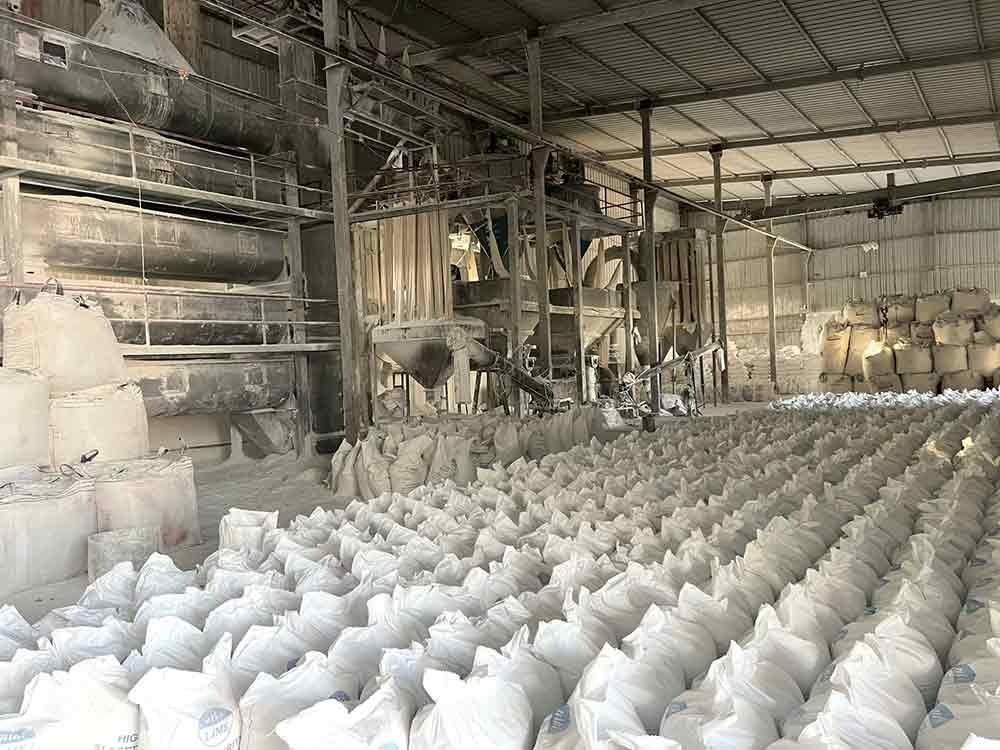
Quicklime reacts with moisture, so storage and packaging matter.
Suitable handling practices include:
- Keeping material protected from moisture
- Using appropriate packaging
- Minimizing unnecessary exposure during handling
- Storing the product in dry conditions
Synergy Chemical Industries offers packaging options including laminated PP/HDPE bags, jumbo bags, and 25–40 kg commercial sacks, depending on requirements.
Batch Consistency
One laboratory report cannot tell you everything about long-term supply performance.
Manufacturers should consider batch-to-batch consistency and ask suppliers about quality testing, documentation, and traceability.
Quicklime Quality Checklist for AAC Manufacturers
| Parameter | What to check |
| CaO | Grade-specific chemical specification |
| Reactivity | Test method and consistency |
| Particle size | Suitable distribution for the process |
| Moisture | Protection during storage and transport |
| Batch consistency | Variation between supplies |
| CoA | Availability of batch quality data |
| Packaging | Moisture-resistant handling |
| Plant trial | Suitability within the manufacturer’s formulation |
Testing a sample under controlled production conditions can also help manufacturers establish whether a particular quicklime is suitable before moving to regular supply.
Quicklime Powder for AAC Blocks from Synergy Chemical Industries
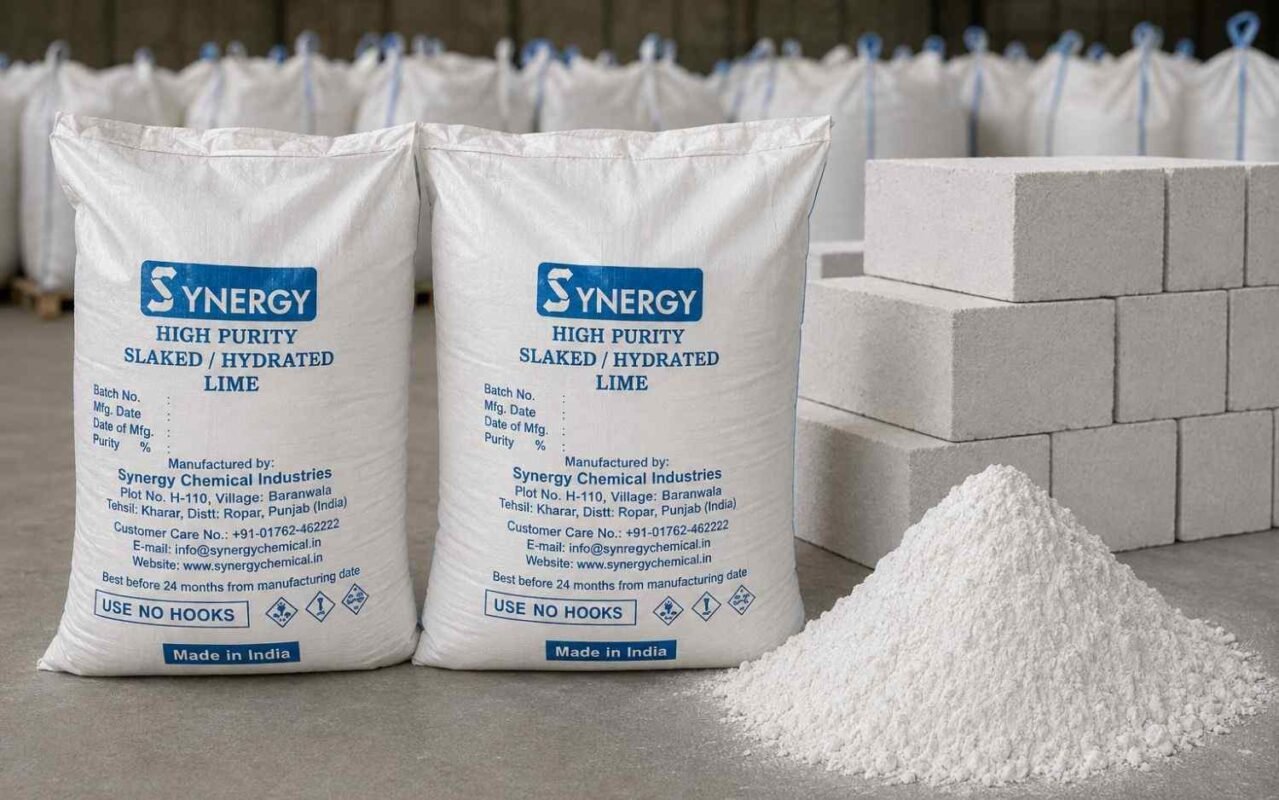
Synergy Chemical Industries supplies quicklime powder and other physical forms for industrial applications, including requirements associated with AAC block manufacturing.
The company’s supplied product information includes:
- CaO grades according to application
- MgO up to 2.5% maximum
- SiO₂ specifications depending on grade
- LOI up to 5% maximum
- Pulverised powder and other physical forms
- Multiple packaging options
For AAC manufacturers in India, selecting the right quicklime means looking beyond a single specification. Reactivity, chemical composition, particle characteristics, moisture control and batch consistency all deserve consideration.
If you are evaluating quicklime powder for AAC blocks, contact Synergy Chemical Industries to discuss your required grade, product specification, packaging and supply requirements.
Frequently Asked Questions
Q1. Why is quicklime used in AAC blocks?
Answer: Quicklime supplies calcium oxide within the AAC raw-material system. It reacts with water to form calcium hydroxide and releases heat, contributing to the chemical and thermal conditions of the production process.
Q2. What does quicklime reactivity mean?
Answer: Quicklime reactivity indicates how readily calcium oxide reacts with water under specified testing conditions. It relates to the rate of hydration and associated heat release.
Q3. Is high-reactivity quicklime always better for AAC?
Answer: No. The suitable reactivity depends on the AAC formulation and plant operating conditions. Consistent and predictable behaviour is generally more useful than simply selecting the highest-reactivity material.
Q4. What should AAC manufacturers check when buying quicklime?
Answer: Manufacturers should evaluate CaO content, reactivity and its test method, particle size, moisture, batch consistency, packaging, quality documentation and suitability through appropriate testing.
Q5. How should quicklime powder be stored?
Answer: Quicklime should be protected from moisture and stored in dry conditions. Personnel should also follow the supplier’s safety instructions and use suitable protective equipment during handling.
Q6. Can Synergy Chemical Industries supply quicklime for AAC blocks?
Yes. Synergy Chemical Industries supplies quicklime powder and other forms for industrial applications, including AAC-related requirements. Manufacturers can contact the company to discuss the required specification and supply requirements.