
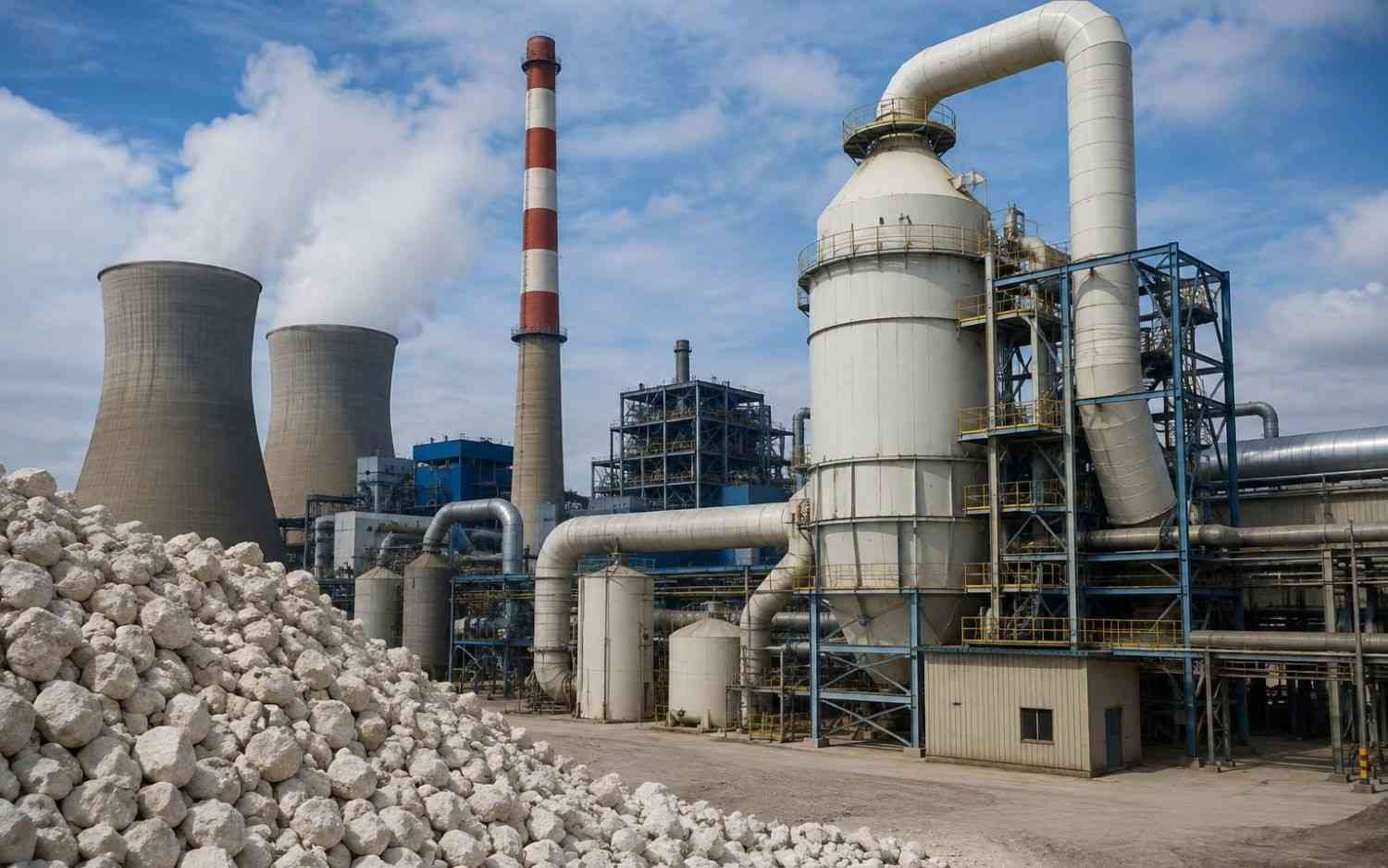
Industrial boilers play a central role in power generation and manufacturing, but they also produce flue gases containing sulphur dioxide (SO₂), one of the primary contributors to air pollution and acid rain. As environmental regulations become more stringent, industries need reliable emission control solutions that improve compliance without compromising operational efficiency.
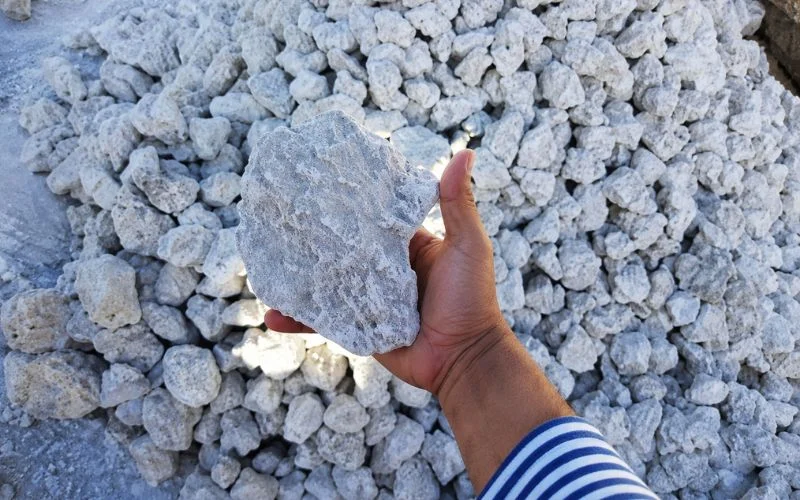
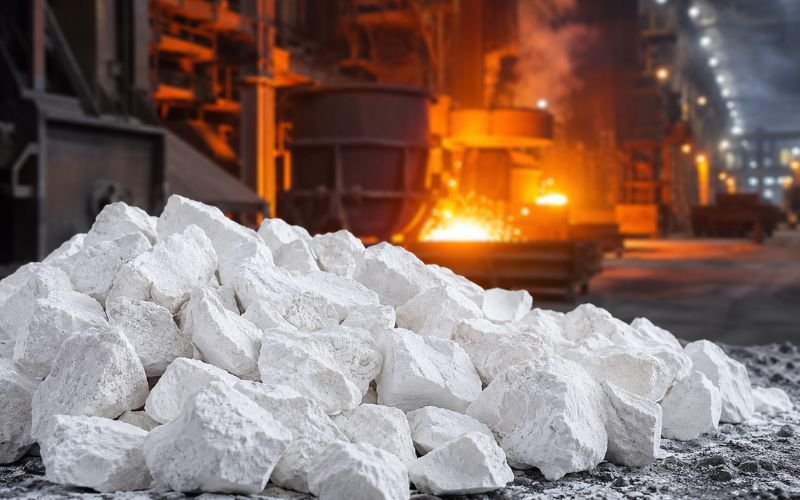
Limestone has become one of the most effective and widely used materials in Flue Gas Desulphurisation (FGD) systems because of its ability to neutralise sulphur dioxide before it reaches the atmosphere. The quality of limestone directly influences FGD performance, operating costs, and long-term system reliability. For industries looking for consistent mineral quality, choosing an experienced limestone manufacturer in Rajasthan such as Synergy Chemical Industries can help support efficient FGD operations.
The Role of Limestone in Flue Gas Desulphurisation Systems
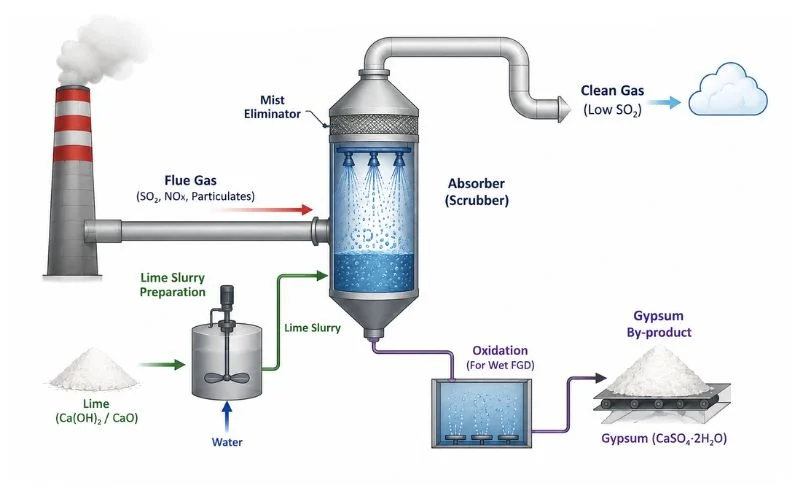
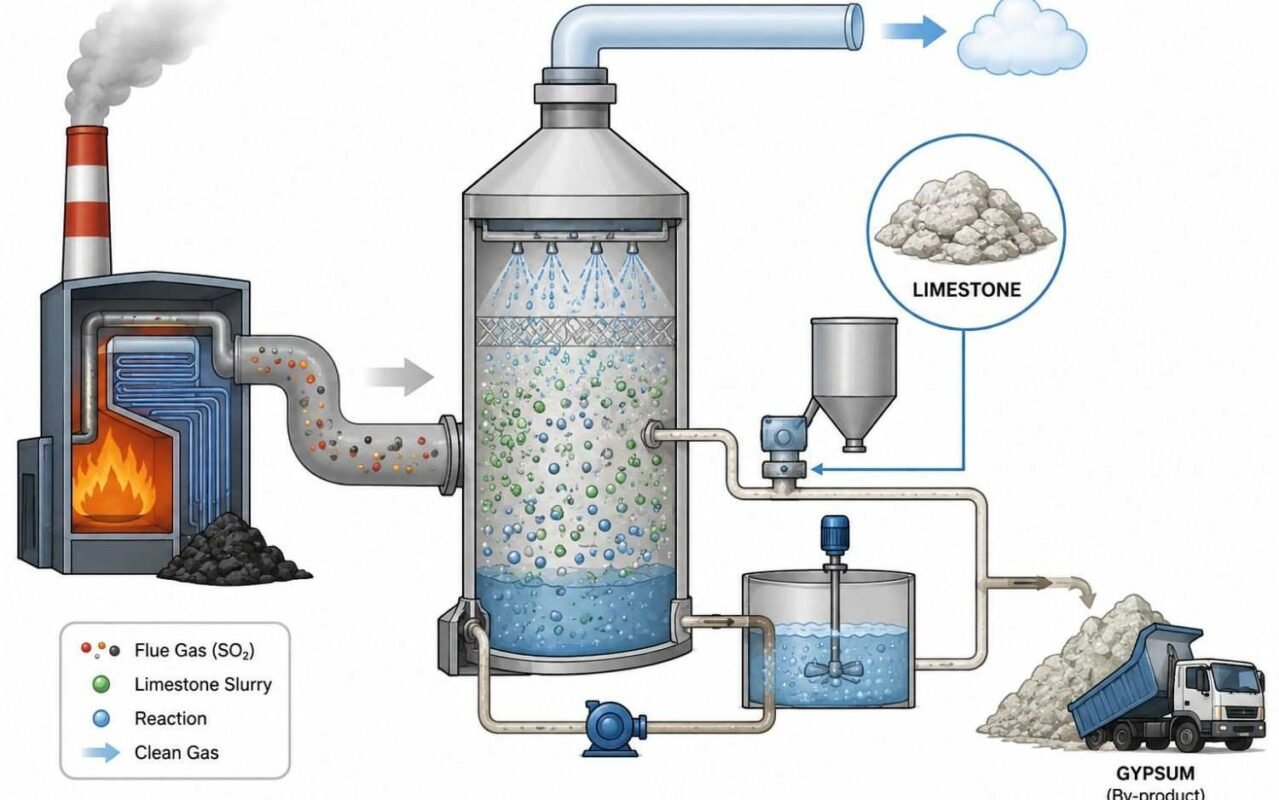
FGD systems are designed to remove sulphur dioxide from the exhaust gases generated during coal combustion. In a wet limestone FGD system, finely ground limestone is mixed with water to create a slurry. This slurry comes into contact with flue gases inside the absorber, where the limestone reacts with sulphur dioxide.
The reaction converts harmful gases into calcium sulphite, which is then oxidised to form gypsum. Gypsum is widely used in the construction industry, making the process beneficial for both emission control and resource utilisation.
This proven technology enables thermal power plants and industrial boilers to significantly reduce sulphur dioxide emissions while supporting compliance with environmental regulations.
Key Benefits of Using High-Quality Limestone in FGD Systems
Choosing high-quality limestone for flue gas desulphurisation improves both environmental performance and operating economics.
Plants benefit through:
- Higher SO₂ removal efficiency with stable absorber operation.
- Lower reagent cost compared with many lime-based wet processes.
- Better gypsum quality that supports potential commercial utilisation.
- Reduced scaling, fouling and unplanned maintenance caused by inconsistent feedstock.
- Improved confidence when working towards compliance with applicable environmental regulations.
Although equipment design and operating conditions also influence performance, reagent quality remains one of the easiest variables for plant operators to control.
The Chemistry Behind SO₂ Removal
The effectiveness of limestone comes from the reaction between calcium carbonate and sulphur dioxide in the presence of water and oxygen.
In simple terms, the process follows these stages:
- Limestone slurry absorbs sulphur dioxide from the flue gas.
- Chemical reactions convert the pollutant into calcium sulphite.
- Oxidation transforms calcium sulphite into gypsum.
- Cleaned flue gas exits the absorber with substantially lower sulphur dioxide levels.
This process allows industries to reduce emissions while maintaining efficient boiler operations.
Limestone Quality Makes a Difference
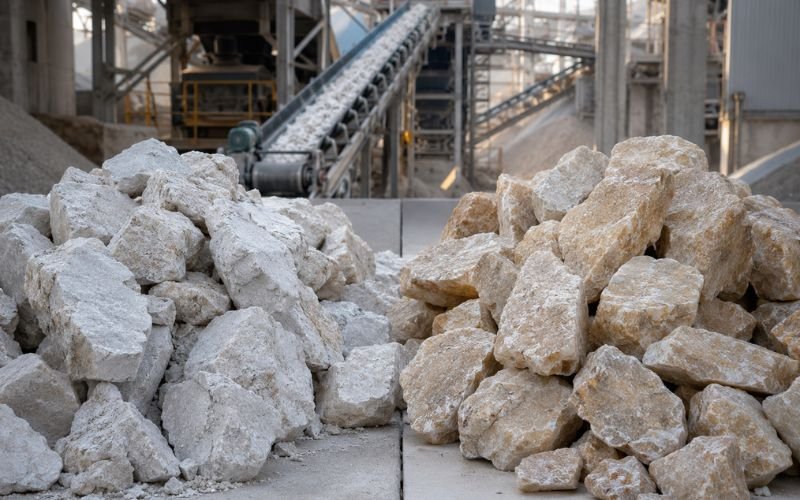
Not all limestone performs the same in FGD applications. Several quality parameters influence absorption efficiency and operating costs.
| Quality Parameter | Importance in FGD Systems |
| Calcium Carbonate Purity | Higher purity improves sulphur dioxide removal. |
| Particle Size | Fine particles increase reaction efficiency. |
| Silica Content | Lower silica helps reduce unwanted residue. |
| Moisture | Consistent moisture supports stable slurry preparation. |
| Reactivity | Higher reactivity improves overall scrubber performance. |
Selecting limestone based on these factors can improve process efficiency and reduce maintenance requirements.
Common Factors That Affect FGD Performance
Even a well designed FGD system depends on consistent raw material quality and proper operation.
Performance may decline because of:
- Low limestone purity.
- Inconsistent particle size distribution.
- Poor slurry preparation.
- Incorrect pH control.
- Equipment scaling.
- Irregular maintenance practices.
Routine monitoring and the use of high quality limestone help maintain stable emission control over time.
Choosing the Right Limestone Supplier
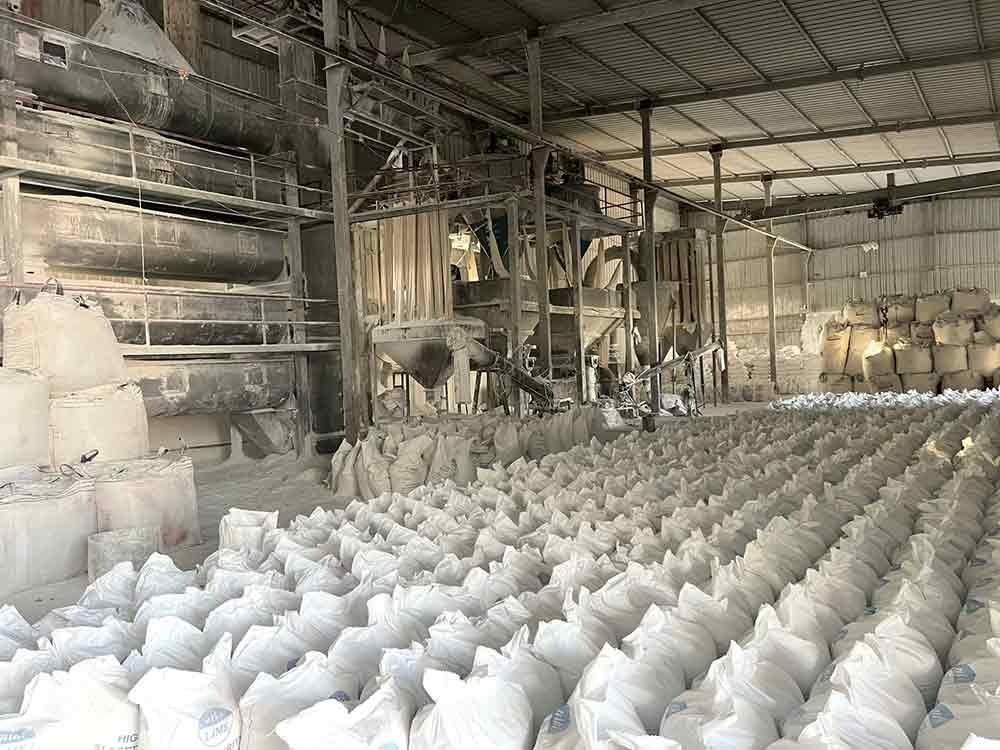
Selecting a supplier involves more than comparing prices. A dependable supplier should demonstrate consistent product quality, reliable logistics and the ability to meet industrial requirements.
When evaluating a limestone supplier, consider:
- Product consistency across every shipment.
- Laboratory testing and quality assurance.
- Manufacturing capability.
- Supply reliability.
- Technical support.
- Experience serving industrial applications.
As an established Limestone Manufacturer in Rajasthan, Synergy Chemical Industries focuses on supplying quality limestone for industrial applications while understanding the performance requirements of modern FGD systems.
Purity and Reactivity Decide How Well Your System Performs
Not every limestone behaves the same way once it hits the scrubber, and this is where a lot of plants lose efficiency without realising why. Two limestones with an identical CaCO3 percentage on paper can dissolve at very different speeds, and dissolution speed is what actually determines how much sulphur gets captured before the gas exits the absorber. Fineness, crystal structure, and the level of inert impurities all affect that reaction rate. A typical FGD grade specification looks something like this:
| Parameter | Typical requirement | Why it matters |
| CaCO3 | Above 95 percent | Sets the available alkalinity for the reaction |
| Fineness | Around 200 to 325 mesh | Faster dissolution and better contact with SO2 |
| Silica (SiO2) | Below 3 percent | Limits abrasion and scaling inside the absorber |
| Magnesium (MgO/MgCO3) | Below 2 percent | Keeps gypsum quality consistent and reduces scale build up |
| Moisture | Low and stable | Keeps slurry dosing accurate |
Buyers who only ask for a purity percentage and skip everything else in this table often end up compensating with more limestone, more energy, and more downtime than the process should actually need
Why Rajasthan Plays an Important Role
Rajasthan is recognised for its extensive limestone reserves and well developed mining and industrial infrastructure. These advantages support a dependable supply chain for industries across India.
Manufacturers based in Rajasthan can offer efficient logistics, consistent mineral availability, and access to high quality deposits, making the region an important source of limestone for FGD applications.
Practical Takeaways for Better FGD Performance
An efficient FGD system depends on both sound engineering and consistent raw material quality. High purity limestone, proper particle sizing and reliable supply all contribute to improved sulphur dioxide removal and lower operating costs.
Industries planning new projects or upgrading existing emission control systems should evaluate limestone quality alongside supplier expertise. Working with an experienced limestone manufacturer in Rajasthan such as Synergy Chemical Industries can support dependable FGD performance while helping organisations meet environmental expectations.
Frequently Asked Questions
Q1. Why is limestone used in FGD systems?
Answer: Limestone is used because its calcium carbonate reacts with sulphur dioxide in flue gases, reducing harmful emissions and producing gypsum as a useful by product.
Q2. Which limestone is best for flue gas desulfurization?
Answer: High purity limestone with consistent particle size, low silica content and good reactivity generally delivers better sulphur dioxide removal and improved scrubber efficiency.
Q3. How does limestone improve boiler emission control?
Answer: Limestone removes sulphur dioxide before flue gases are released into the atmosphere, helping industries comply with emission regulations and improve environmental performance.
Q4. Does limestone quality affect FGD operating costs?
Answer: Yes. Higher quality limestone can improve reaction efficiency, reduce reagent consumption, minimise scaling and lower maintenance requirements, resulting in more economical operation.
Q5. Why choose a limestone manufacturer in Rajasthan for FGD applications?
Answer: Rajasthan is known for its significant limestone reserves and established industrial infrastructure. Choosing an experienced manufacturer such as Synergy Chemical Industries can help ensure consistent product quality and a reliable supply for industrial FGD systems