
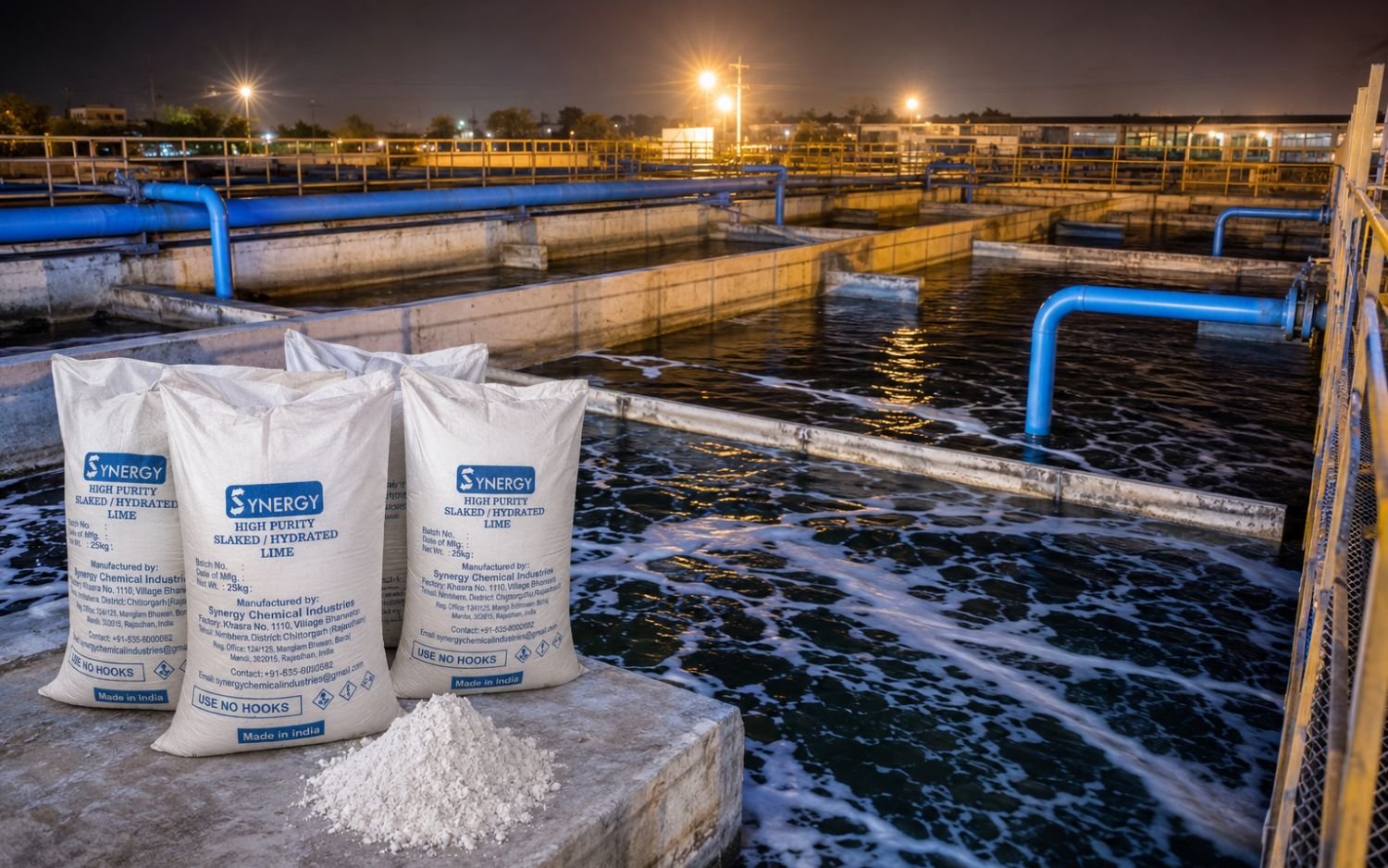
Water-treatment plants need careful control of water chemistry to achieve consistent treatment results. Hydrated lime, also known as slaked lime or calcium hydroxide (Ca(OH)₂), is widely used for pH and alkalinity adjustment, water softening, and selected precipitation processes.
Its alkaline properties make it useful when treatment systems need to neutralise acidity or establish suitable chemical conditions for downstream processes such as coagulation and clarification.
For treatment operators and industrial buyers, the important question is not simply whether hydrated lime raises pH. The real consideration is how it interacts with the water chemistry, how much the process requires, and which product specification suits the application.
What Is Hydrated Lime?
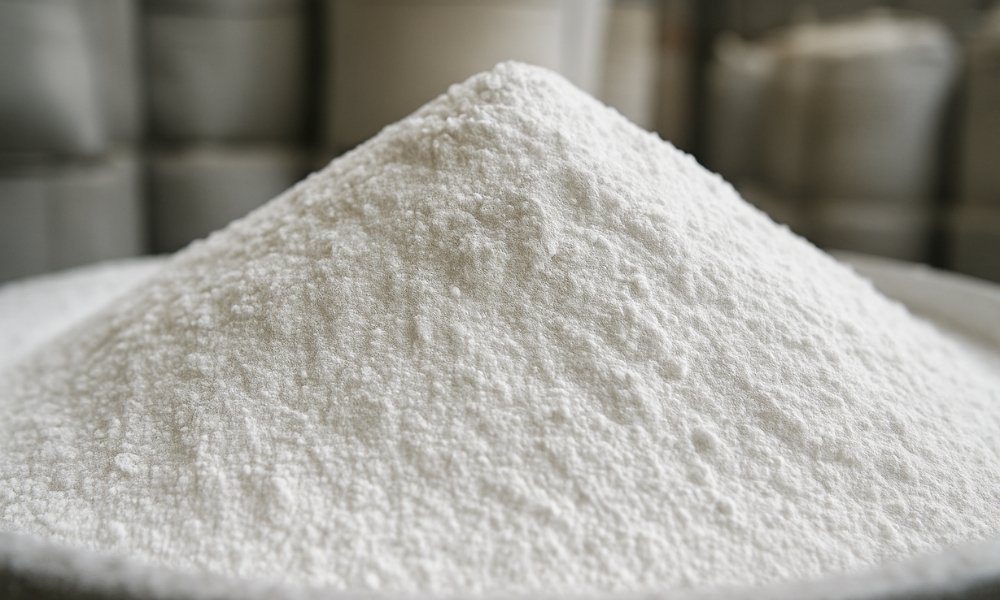
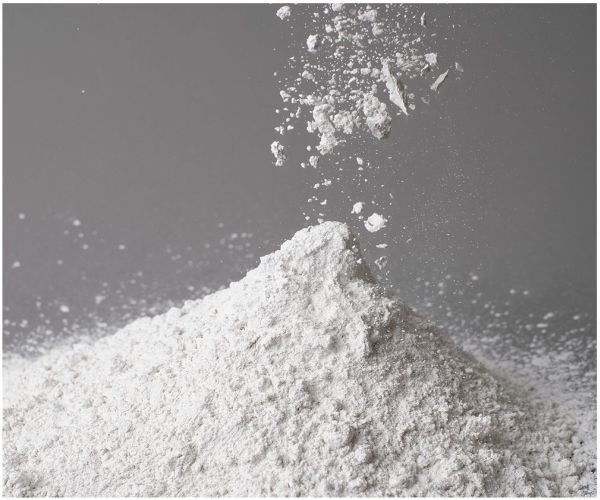
Hydrated lime is calcium hydroxide, with the chemical formula Ca(OH)₂. Manufacturers produce it by adding water to quicklime, or calcium oxide, to create a fine alkaline powder.
When hydrated lime dissolves in water, it releases calcium and hydroxide ions:
Ca(OH)₂ → Ca²⁺ + 2OH⁻
The hydroxide ions help neutralise acidity and increase alkalinity. This makes hydrated lime useful for controlled pH adjustment across various water and wastewater treatment processes.
How Does Hydrated Lime Control Water pH?
One of the main applications of hydrated lime is pH adjustment.
When acidic water enters a treatment process, operators may add an alkaline material to move the pH towards the required operating range. Hydrated lime supplies hydroxide ions that react with acidic components in the water.
However, the required quantity depends on the water’s chemistry. Two water sources can have the same starting pH yet require different quantities of lime because their acidity and alkalinity differ.
Several factors influence the amount required:
- Initial pH
- Acidity and alkalinity
- Water hardness
- Treatment objective
- Desired final pH
- Flow rate
- Mixing efficiency
- Other chemicals used in the process
This is why treatment operators should avoid applying a fixed lime dose without first understanding the water chemistry.
pH and alkalinity are not the same
pH indicates how acidic or alkaline water is at a particular point, while alkalinity describes the water’s ability to neutralise acids.
This distinction matters because pH alone does not tell an operator exactly how much hydrated lime the water will require. Two water sources with similar pH values can respond differently to the same lime dose.
How Does Hydrated Lime Affect Coagulation?
Hydrated lime is not universally a coagulant. Its primary role involves adjusting pH and alkalinity, but these changes can influence the chemistry of coagulation and precipitation.
Coagulation destabilises fine particles so they can come together more readily. Flocculation then encourages these particles to form larger flocs, which can improve their separation through processes such as sedimentation.
pH can influence how certain coagulants and dissolved compounds behave. By adjusting the water chemistry, hydrated lime can therefore help establish conditions that support particular coagulation or precipitation processes.
The actual effect depends on:
- Raw-water chemistry
- The coagulant being used
- Target pH
- Alkalinity
- Contaminants present
- Mixing conditions
- Overall treatment design
For this reason, operators should consider lime dosing as part of the wider treatment process rather than treating it as a standalone coagulation solution.
Hydrated Lime for Water Softening

Hydrated lime also has an established role in lime softening.
In suitable water chemistries, lime treatment can encourage calcium and magnesium compounds to form precipitates. Treatment plants can then separate these solids through clarification and other downstream processes.
The effectiveness of lime softening depends on the water’s hardness, alkalinity, temperature, treatment conditions and process design.
For plants dealing with hard water, lime treatment can therefore form part of a broader strategy for controlling hardness and improving water quality.
Hydrated Lime in Wastewater Treatment
Wastewater characteristics can vary significantly from one facility to another, but hydrated lime can support several treatment objectives where alkaline conditions are required.
Common applications include:
- pH correction and neutralisation
- Precipitation of selected contaminants
- Treatment of certain dissolved metals under suitable conditions
- Water softening
- Adjustment of treatment chemistry
- Support for downstream separation processes
The correct application depends on the wastewater composition and the treatment objective. Operators should assess the process conditions before selecting a lime grade or establishing a dosage.
How Much Hydrated Lime Is Needed for Water Treatment?
There is no universal hydrated lime dosage that works for every treatment plant.
The required quantity depends on the characteristics of the water and the desired treatment result.
| Factor | Why it matters |
| Initial pH | Shows the starting chemical condition of the water |
| Acidity | Influences the amount of alkaline material required |
| Alkalinity | Affects how the water responds to lime |
| Hardness | Influences lime-softening reactions |
| Treatment objective | Determines the required chemical conditions |
| Mixing | Affects contact between lime and water |
| Product specification | Influences the amount of active calcium hydroxide available |
Treatment facilities may use laboratory testing, titration, jar testing or pilot studies to establish an appropriate starting dose.
Operators should also monitor the treated water after dosing. Adding more lime does not automatically produce better treatment; excessive dosing can push pH beyond the desired operating range and affect subsequent treatment stages.
Hydrated Lime vs Other pH Adjustment Chemicals
Hydrated lime is one of several alkaline chemicals available for water-treatment applications.
| Chemical | Main role | pH effect | Key consideration |
| Hydrated lime | pH/alkalinity adjustment, softening and precipitation-related processes | Raises pH | Requires controlled dosing and adequate mixing |
| Quicklime | Lime-based alkalinity and pH adjustment | Raises pH after reacting with water | Requires appropriate handling and process setup |
| Caustic soda | Rapid pH and alkalinity adjustment | Raises pH | Highly caustic and requires careful handling |
| Soda ash | Alkalinity adjustment and selected softening applications | Raises alkalinity/pH | Selection depends on water chemistry |
There is no single chemical that suits every treatment plant. Chemical selection depends on water chemistry, treatment objectives, equipment, handling requirements, operating conditions and overall process economics.
What Should You Check When Buying Hydrated Lime?
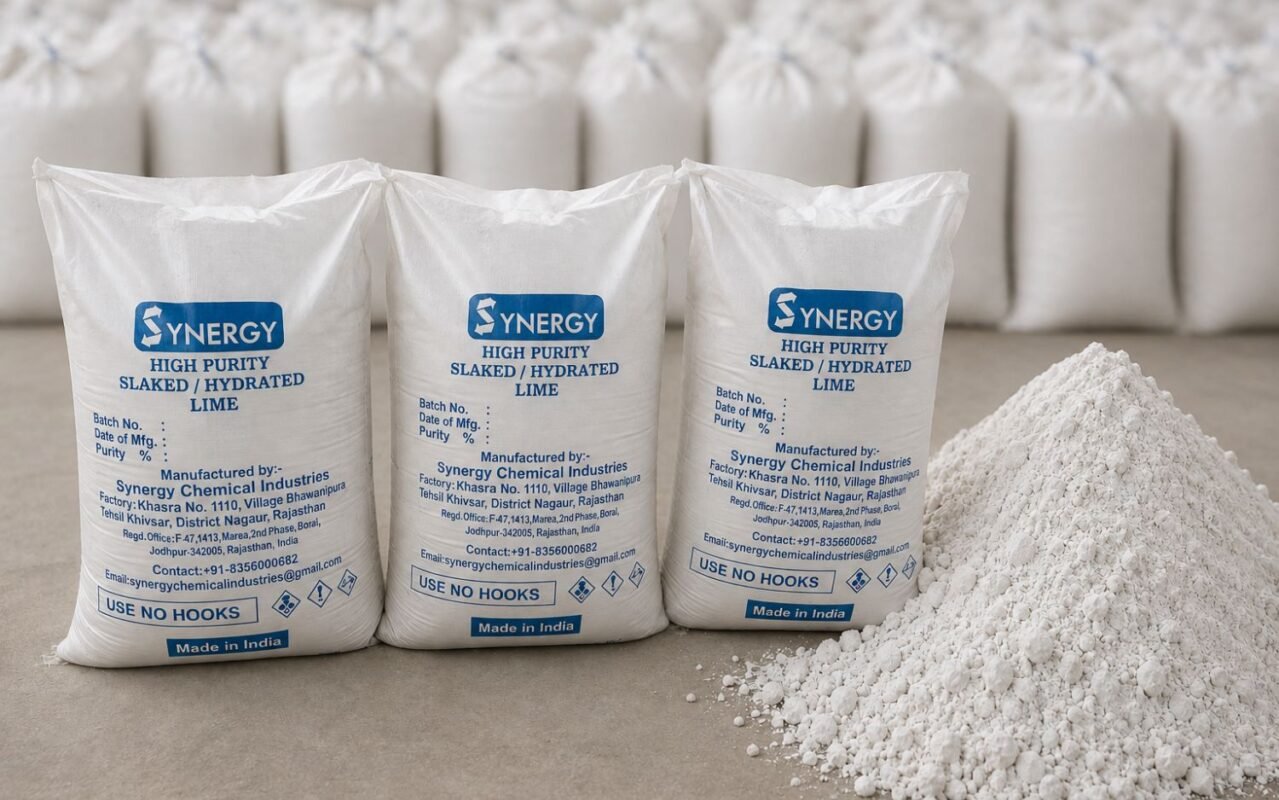
Product selection deserves the same attention as dosage. A treatment plant should consider the specification that best matches its process rather than selecting a product based only on price or Ca(OH)₂ percentage.
Important parameters can include:
- Ca(OH)₂ content
- Moisture
- MgO
- Acid-insoluble matter
- Iron and alumina
- Particle or mesh characteristics
- Colour where relevant
- Packaging
- Batch consistency
- Product documentation
- Application suitability
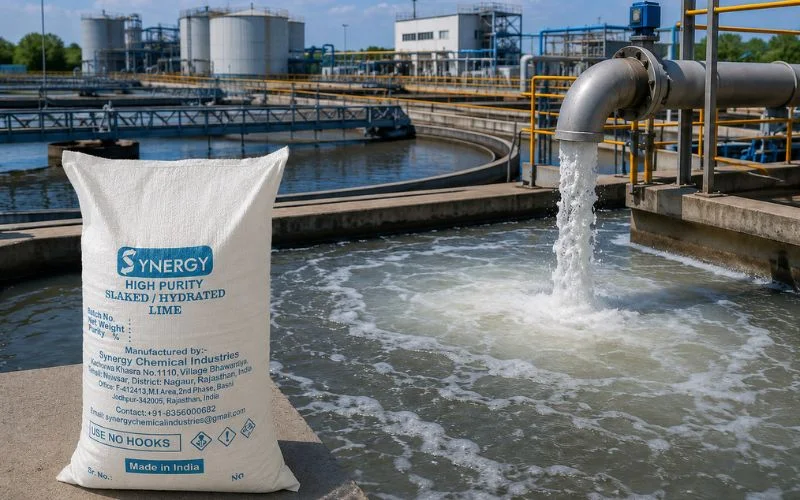
For example, Synergy Chemical Industries supplies slaked/hydrated lime in several grades. Its listed Ca(OH)₂ content ranges from 70% to 96%+, depending on the grade.
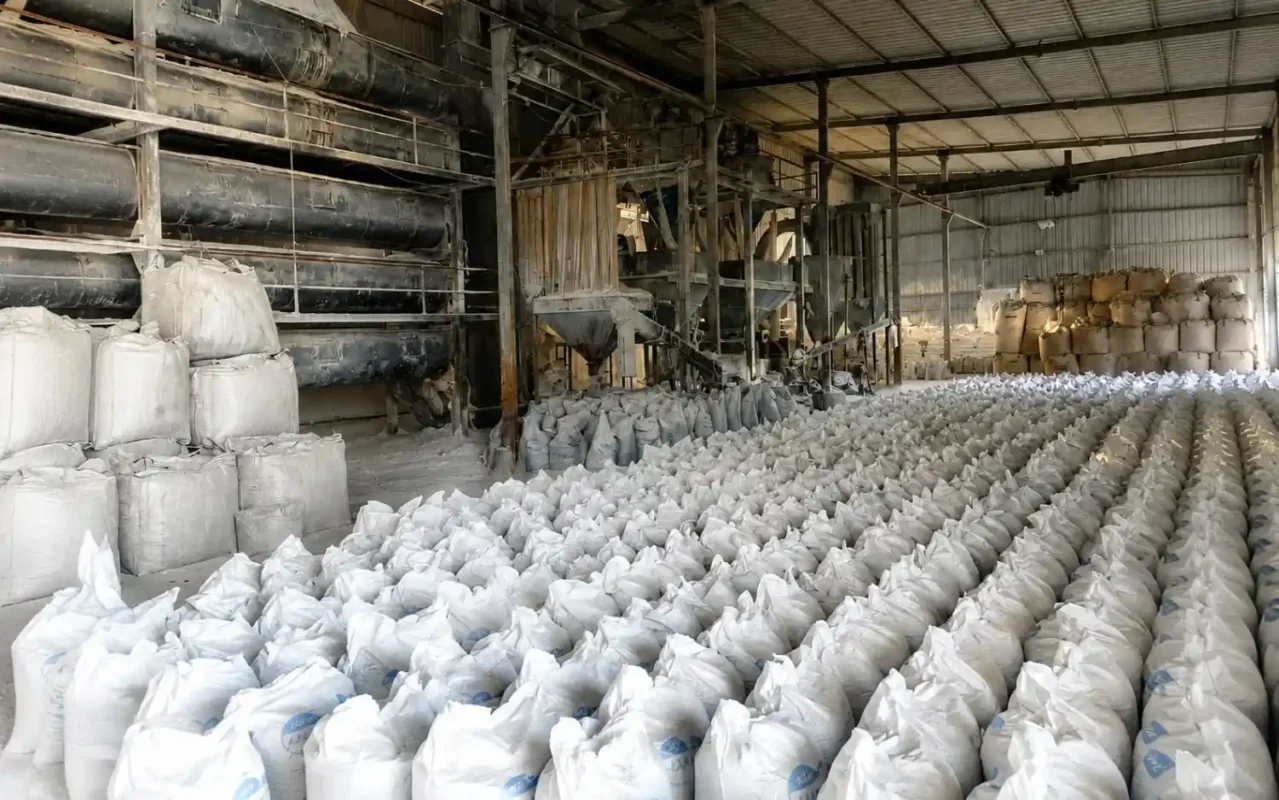
The company also lists 40 kg PP bags, laminated bags, and jumbo bags up to 1 tonne as packaging options.
The available specifications include differences in moisture, MgO, acid-insoluble matter, and mesh size, giving buyers different options depending on their application requirements.
The appropriate grade should always depend on the treatment process and required product specification. A higher Ca(OH)₂ percentage does not automatically make a particular grade the right choice for every application.
How Should Hydrated Lime Be Stored and Handled?
Hydrated lime is an alkaline powder, so proper storage and handling help maintain product quality and protect workers.
Good practices include:
- Keep the product protected from moisture.
- Store it in suitable, dry conditions.
- Control dust during handling and transfer.
- Use appropriate personal protective equipment.
- Prevent contamination during storage.
- Maintain dosing and conveying equipment properly.
- Follow the manufacturer’s current safety data sheet (SDS).
Storage conditions also matter because moisture exposure can affect the handling characteristics of powdered lime.
How to Choose the Right Hydrated Lime for Water Treatment
For a water-treatment plant, choosing hydrated lime should start with the water chemistry and treatment objective, not simply the product price or highest available purity.
Understand the starting pH and alkalinity, establish what the treatment process needs to achieve, evaluate the relevant product specifications, and then validate the required dose through appropriate testing.
For businesses looking for hydrated lime supply in India, Synergy Chemical Industries in Rajasthan offers multiple grades and packaging formats for different industrial requirements. The most suitable grade can be discussed based on the application’s specification, required quantity, and intended use.
Frequently Asked Questions
Q1. Is hydrated lime used for water treatment?
Answer: Yes. Treatment plants use hydrated lime for applications including pH and alkalinity adjustment, water softening, and selected precipitation processes.
Q2. How does hydrated lime increase water pH?
Answer: Calcium hydroxide releases hydroxide ions when it dissolves in water. These ions neutralise acidity and increase alkalinity, which raises the water’s pH.
Q3. Is hydrated lime a coagulant?
Answer: Not universally. Hydrated lime primarily adjusts pH and alkalinity. These changes can support particular coagulation and precipitation processes, depending on the water chemistry and treatment system.
Q4. Can hydrated lime be used for wastewater treatment?
Answer: Yes. Suitable wastewater applications include pH correction, neutralization, precipitation, and certain metal-treatment processes. The appropriate application depends on the wastewater characteristics and process design.
Q5. How much hydrated lime should be added to water?
Answer: The required amount varies according to pH, acidity, alkalinity, hardness, treatment objectives, and other process conditions. Testing and monitoring should guide the dosage rather than relying on a universal figure.
Q6. What grades of hydrated lime does Synergy Chemical Industries supply?
Answer: Synergy Chemical Industries lists multiple hydrated lime grades with Ca(OH)₂ content ranging from 70% to 96%+, along with different specifications for moisture, MgO, acid-insoluble matter, and mesh size.