
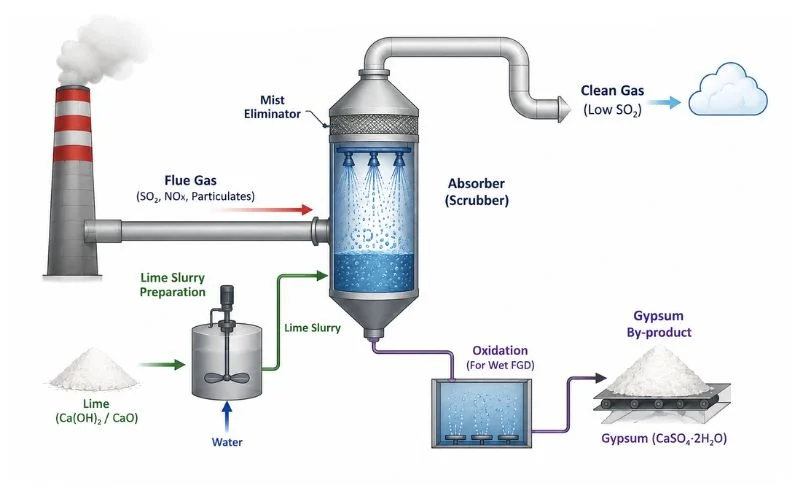
Industrial emissions remain one of the biggest environmental challenges for sectors such as power generation, steel manufacturing, cement production and chemical processing. Among the various pollutants released during fuel combustion, sulphur dioxide (SO₂) is one of the most closely regulated because of its impact on air quality, public health and the environment.
Flue Gas Desulphurisation (FGD) is a proven technology that helps industries significantly reduce sulphur dioxide emissions before flue gases are released into the atmosphere. A key component of many FGD systems is lime, which acts as an efficient absorbent for removing sulphur dioxide.
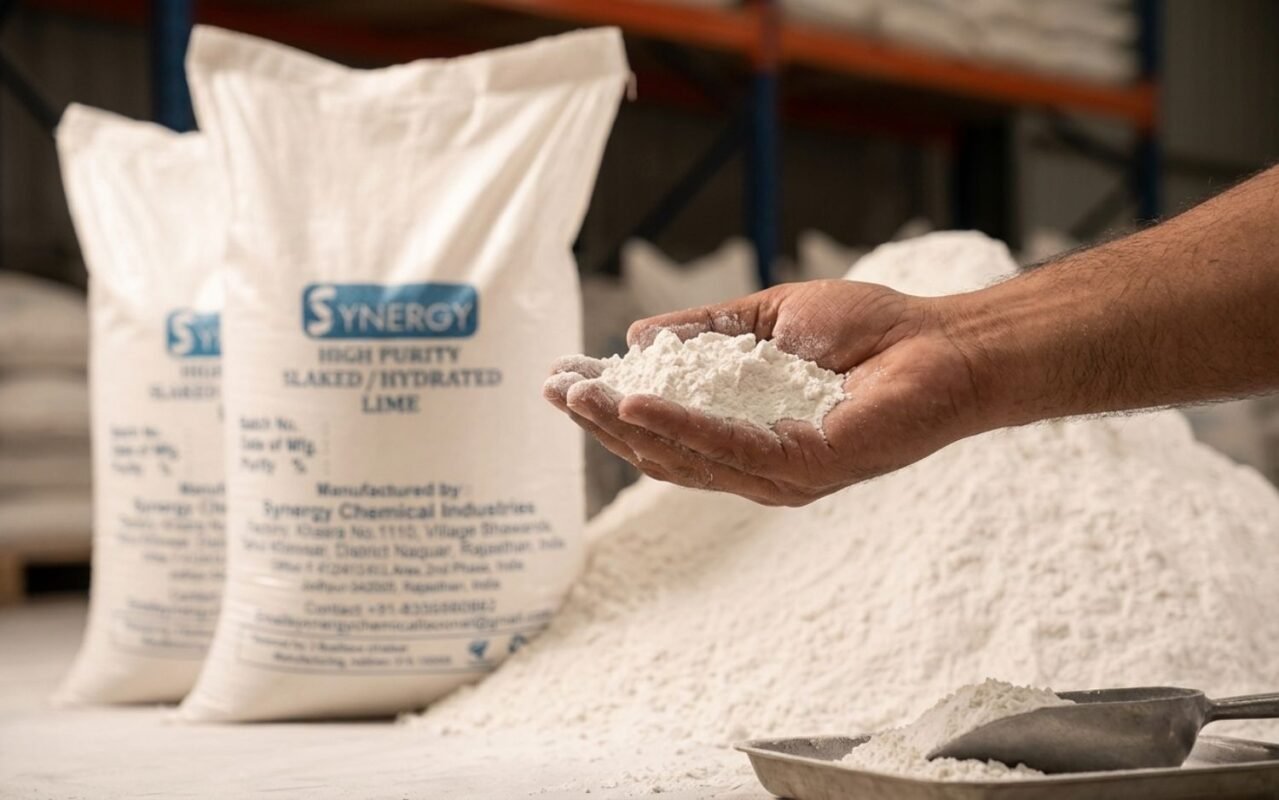
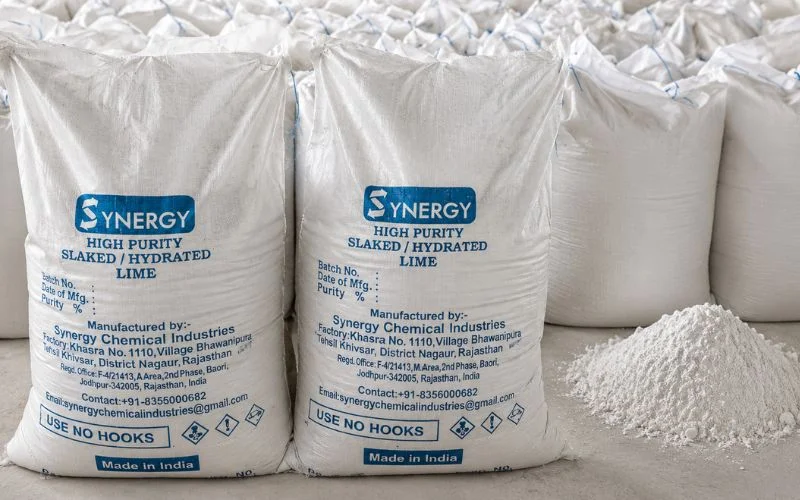
As experienced lime manufacturers in Rajasthan, Synergy Chemical Industries supplies high quality quick lime and hydrated lime for a wide range of industrial applications, including pollution control systems where consistent product quality is essential for reliable performance.
What Is Flue Gas Desulphurisation (FGD)?
Flue Gas Desulphurisation, commonly known as FGD, is an emission control process that removes sulphur dioxide from exhaust gases generated during the combustion of coal, petroleum coke and other sulphur containing fuels.
FGD systems are widely used in:
- Thermal power plants
- Steel plants
- Cement manufacturing units
- Waste to energy facilities
- Refineries
- Chemical processing plants
The primary objective is to reduce sulphur dioxide emissions and help industries comply with environmental regulations while improving air quality.
Why Is Sulphur Dioxide Removal Important?
Sulphur dioxide is a major contributor to air pollution. If released without treatment, it can react with moisture in the atmosphere to form acid rain, which affects forests, water bodies, buildings and agricultural land.
Reducing SO₂ emissions also helps industries:
- Meet environmental compliance requirements
- Improve workplace safety
- Reduce environmental impact
- Support sustainable manufacturing practices
- Protect nearby communities from harmful emissions
Many countries have adopted stricter emission standards, making FGD systems an important investment for industrial operations.
Why Is Lime Used in FGD Systems?
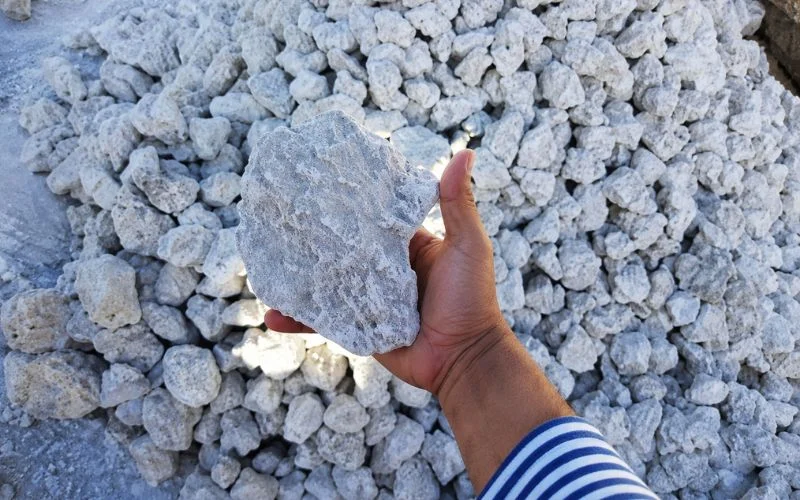
Lime is widely recognised as one of the most effective absorbents for sulphur dioxide removal because of its high chemical reactivity.
The two most commonly used forms are:
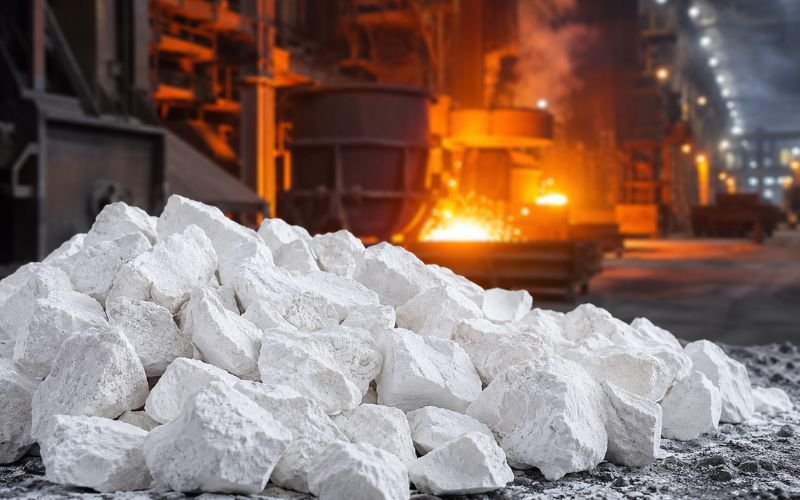
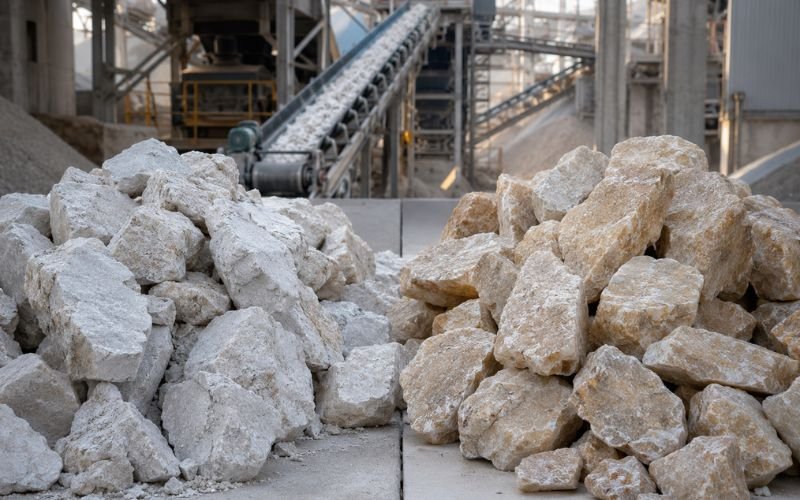
- Quick Lime (Calcium Oxide)
- Hydrated Lime (Calcium Hydroxide)
When lime comes into contact with sulphur dioxide, it reacts to form stable compounds that can be safely managed or further processed.
Some of the main reasons industries choose lime include:
- High sulphur dioxide removal efficiency
- Fast reaction rate
- Reliable performance
- Suitable for different FGD technologies
- Readily available for industrial applications
- Cost effective operation when high quality lime is used
How Does Lime Remove Sulphur Dioxide?
The process involves a series of chemical reactions.
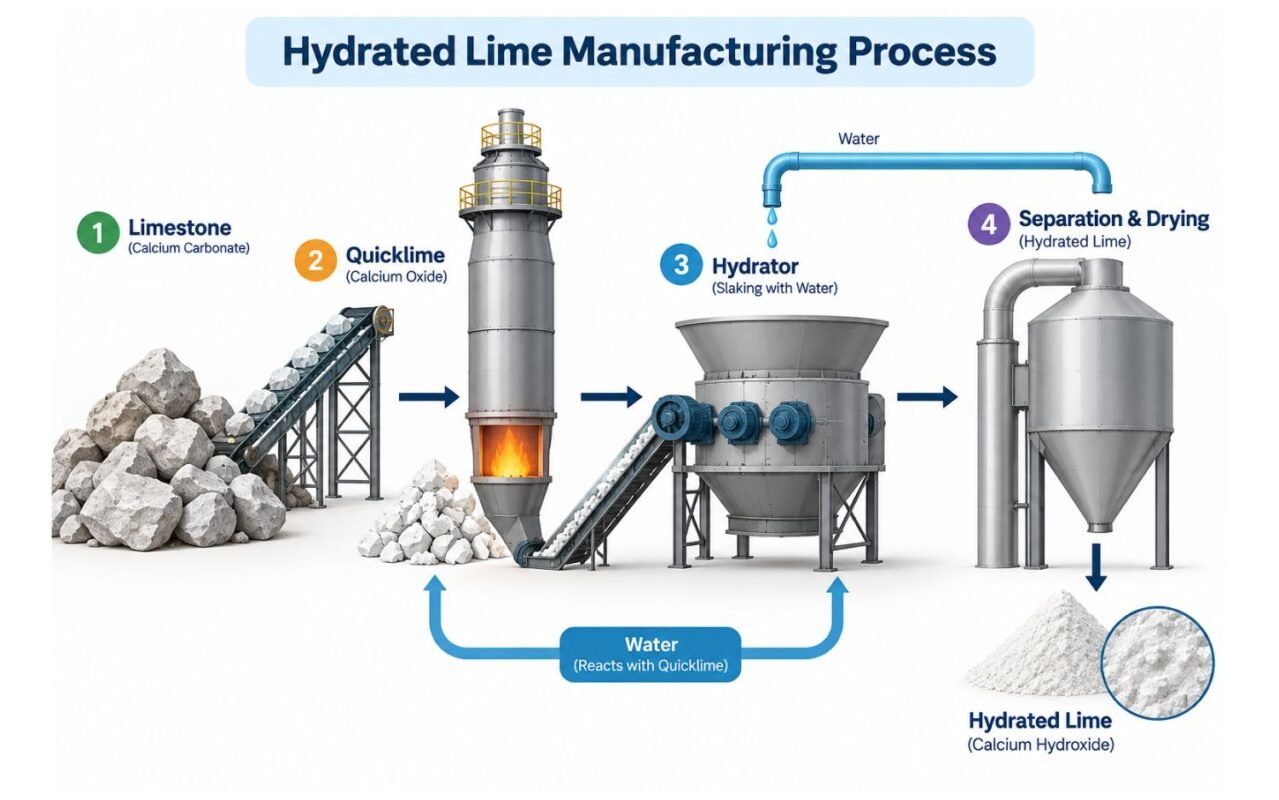
First, quick lime is hydrated to produce calcium hydroxide.
CaO + H₂O → Ca(OH)₂
The hydrated lime then reacts with sulphur dioxide present in the flue gas.
Ca(OH)₂ + SO₂ → CaSO₃ + H₂O
In wet FGD systems, oxidation converts calcium sulphite into gypsum.
CaSO₃ + Oxygen + Water → CaSO₄·2H₂O
Gypsum generated during this process may be used in industries such as cement manufacturing and construction, depending on its quality.
Step by Step FGD Process
Although equipment designs vary between industries, the basic process follows these stages.
Step 1: Flue Gas Collection
Flue gases produced during fuel combustion are directed towards the FGD unit before reaching the chimney.
Step 2: Lime Slurry Preparation
Hydrated lime or prepared lime slurry is mixed with water to achieve the required concentration for efficient absorption.
Step 3: Gas Absorption
Inside the absorber tower, lime slurry comes into contact with sulphur dioxide in the flue gas.
The chemical reaction removes a significant percentage of sulphur dioxide from the gas stream.
Step 4: Oxidation Process
In wet FGD systems, oxidation converts reaction products into gypsum.
Step 5: Clean Gas Discharge
After treatment, the cleaned flue gas exits through the stack with substantially lower sulphur dioxide emissions.
Types of Flue Gas Desulphurisation Systems
Wet FGD
Wet FGD uses lime or limestone slurry to absorb sulphur dioxide and is commonly installed in large thermal power plants.
Benefits include:
- High removal efficiency
- Suitable for large capacity plants
- Stable operation
Dry FGD
Dry systems inject hydrated lime directly into the gas stream.
Advantages include:
- Lower water consumption
- Compact design
- Easier installation
Semi Dry FGD
Semi dry systems spray lime slurry into hot flue gases, where moisture evaporates and reaction products are collected by dust control equipment.
These systems offer a balance between wet and dry technologies.
Quick Lime vs Hydrated Lime for FGD
| Parameter | Quick Lime | Hydrated Lime |
| Chemical Formula | CaO | Ca(OH)₂ |
| Reactivity | High after hydration | Ready for immediate reaction |
| Storage | Requires moisture protection | Easier to handle |
| Slurry Preparation | Additional hydration required | Direct preparation |
| Common Application | Large industrial plants | Wet and dry FGD systems |
Selecting the right product depends on plant design, emission targets and operating conditions.
Benefits of Using Lime in Flue Gas Desulphurisation
Using quality lime in an FGD system provides several operational and environmental advantages.
High SO₂ Removal Efficiency
Properly designed FGD systems can remove more than 90 percent of sulphur dioxide emissions.
Improved Environmental Compliance
Lime based FGD systems help industries meet national and international emission standards.
Reliable Process Performance
Consistent lime quality contributes to stable operation and predictable emission control.
Lower Equipment Downtime
Quality lime with controlled impurities helps reduce scaling and unwanted deposits within the system.
Better Operational Efficiency
Higher reactivity often means lower lime consumption and improved overall process economics.
Industrial Applications of Lime Based FGD
Lime plays an important role across several industries.
Thermal Power Plants
Coal fired power plants use FGD systems to control sulphur dioxide emissions before releasing flue gases.
Steel Industry
Steel manufacturing involves high temperature processes that generate sulphur containing gases requiring treatment.
Cement Plants
FGD systems help cement manufacturers comply with environmental regulations while maintaining production efficiency.
Chemical Manufacturing
Chemical processing facilities often require emission control systems to manage acidic gases.
Waste to Energy Plants
Municipal waste combustion generates flue gases containing acidic pollutants that can be treated using lime based systems.
Factors That Influence FGD Performance
Several operating conditions affect sulphur dioxide removal efficiency.
- Lime purity
- Available calcium content
- Particle size distribution
- Slurry concentration
- Gas temperature
- Residence time
- Scrubber design
- Equipment maintenance
Using high quality lime is one of the most effective ways to improve system performance.
Choosing the Right Lime Supplier
Selecting the right supplier is as important as choosing the correct FGD technology.
Consider the following factors:
- Consistent product quality
- High available calcium content
- Reliable manufacturing process
- Stable supply capacity
- Laboratory quality testing
- Technical support
- Timely delivery
- Experience in industrial applications
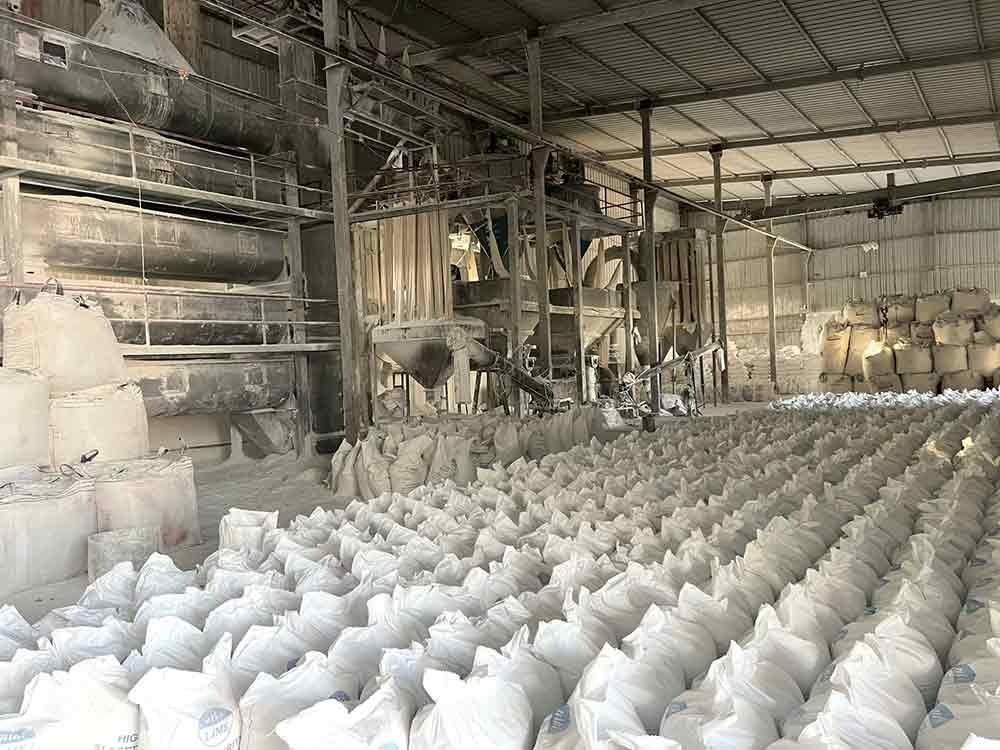
As established lime manufacturers in Rajasthan, Synergy Chemical Industries supplies industrial grade quick lime and hydrated lime manufactured to support demanding industrial processes. Consistent quality, dependable supply and a customer focused approach make the company a reliable partner for industries requiring high performance lime products.
Why High Quality Lime Matters for Efficient FGD Systems
The effectiveness of a Flue Gas Desulphurisation system depends on more than equipment design. The quality of the lime used throughout the process has a direct impact on sulphur dioxide removal efficiency, operating costs and long term system reliability.
Industries that invest in high quality quick lime or hydrated lime can achieve more consistent performance, minimise operational challenges and support compliance with environmental regulations.
For businesses looking for dependable industrial lime products, Synergy Chemical Industries, one of the trusted lime manufacturers in Rajasthan, supplies quality quick lime and hydrated lime for diverse industrial applications, including Flue Gas Desulphurisation systems where consistent performance and product quality are essential.
Frequently Asked Questions
Q1. What is the purpose of Flue Gas Desulphurisation?
Answer: Flue Gas Desulphurisation removes sulphur dioxide from industrial exhaust gases before they are released into the atmosphere. This helps industries reduce air pollution and comply with environmental regulations.
Q2. Why is lime used in FGD systems?
Answer: Lime reacts efficiently with sulphur dioxide to form stable compounds, making it one of the most effective absorbents for reducing emissions in wet, dry and semi dry FGD systems.
Q3. What is the difference between quick lime and hydrated lime?
Answer: Quick lime is calcium oxide, while hydrated lime is calcium hydroxide. Hydrated lime is generally easier to use in many FGD systems because it is already hydrated and readily reacts with sulphur dioxide.
Q4. Which industries use Flue Gas Desulphurisation?
Answer: FGD systems are commonly used in thermal power plants, steel manufacturing, cement plants, refineries, chemical industries and waste to energy facilities.
Q5. How efficient are lime based FGD systems?
Answer: A properly designed and operated lime based FGD system can achieve sulphur dioxide removal efficiencies exceeding 90 percent, depending on operating conditions and equipment design.