
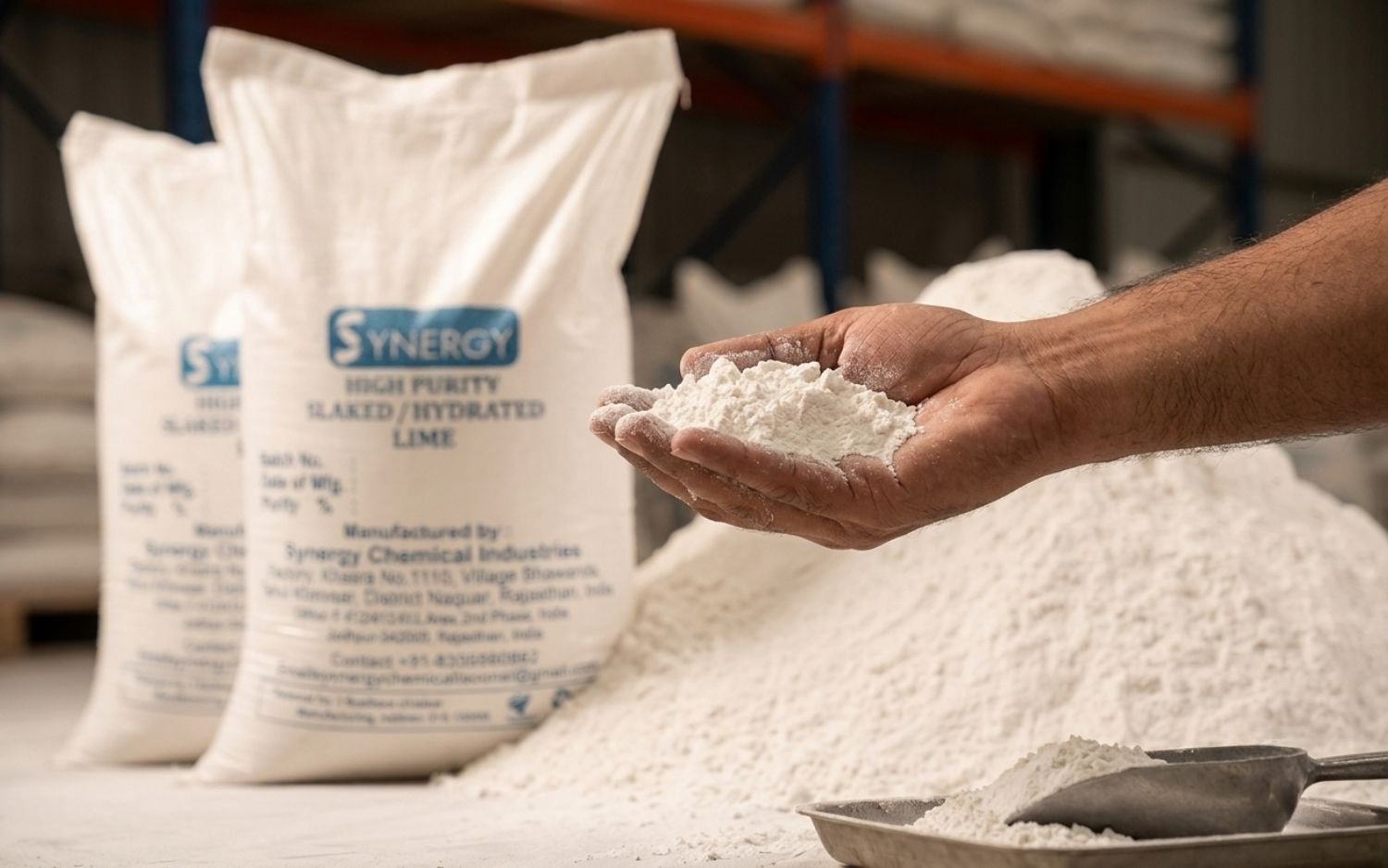
Hydrated lime powder plays a vital role in industries where purity, consistency, and chemical performance are essential. From water treatment plants and steel manufacturing to sugar processing and construction, its versatility makes it one of the most widely used industrial minerals. However, the quality of hydrated lime depends heavily on how it is manufactured. Every stage from selecting the right limestone to final quality testing directly influences its performance in industrial applications.
At Synergy Chemical Industries, we believe that understanding the manufacturing process helps buyers make informed decisions when choosing a reliable hydrated lime supplier. Here’s a closer look at how hydrated lime powder is produced and why manufacturing quality matters.
Understanding Hydrated Lime Powder and Its Industrial Importance
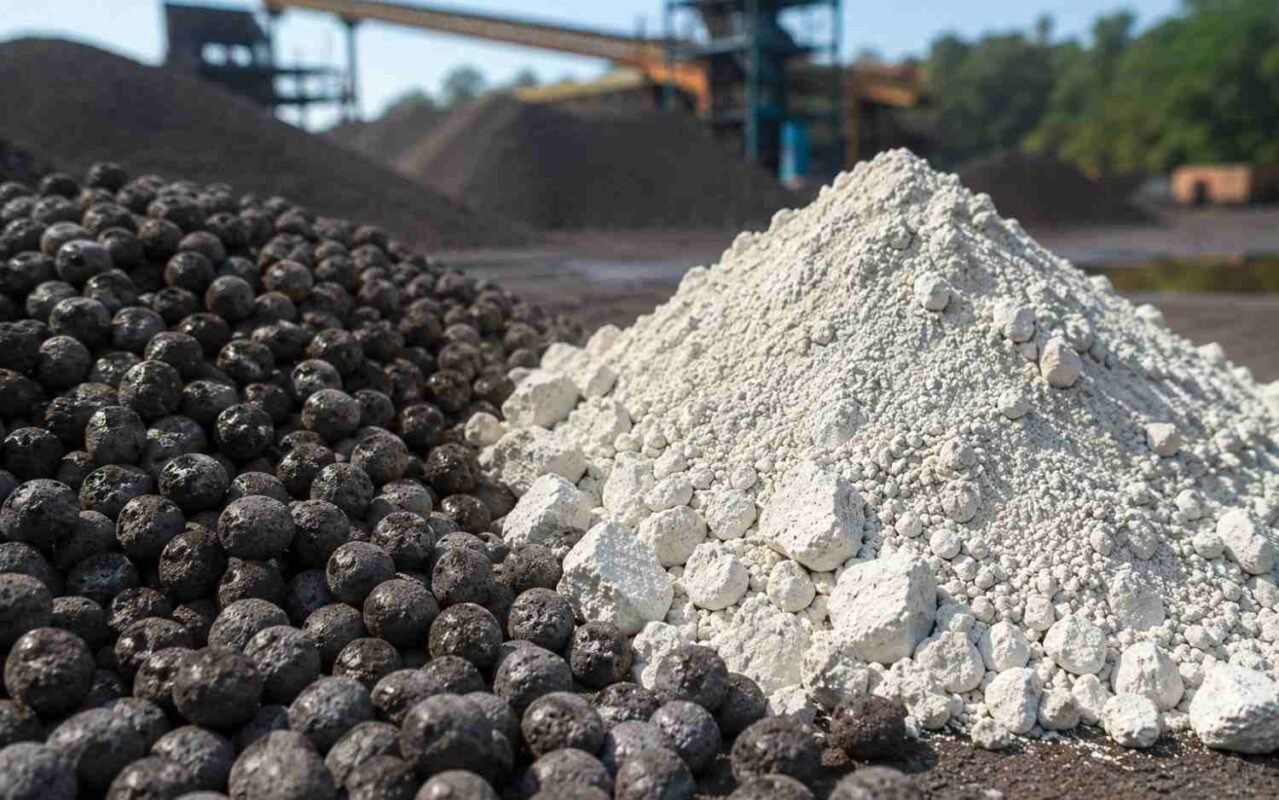
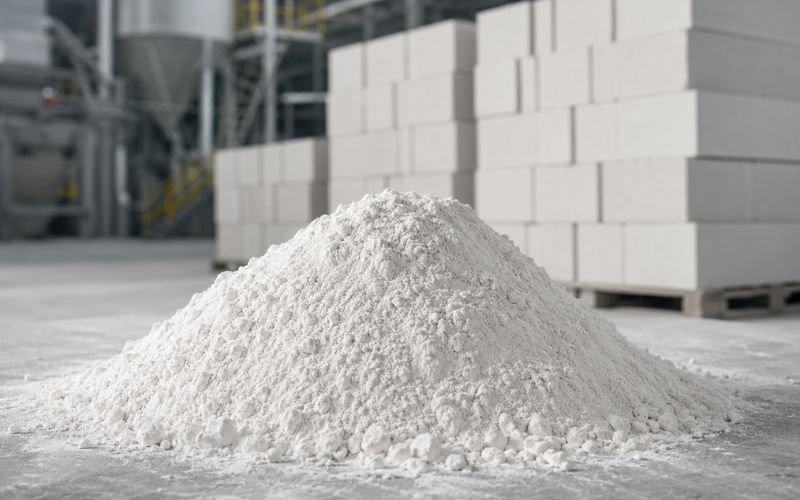
Hydrated lime powder, chemically known as calcium hydroxide (Ca(OH)₂), is produced by carefully adding water to quicklime (calcium oxide). This controlled chemical reaction, known as hydration or slaking, produces a fine white powder with excellent alkalinity and reactivity.
Thanks to its ability to regulate pH, neutralize acids, and remove impurities, hydrated lime is widely used across several industrial sectors where consistent chemical performance is required.
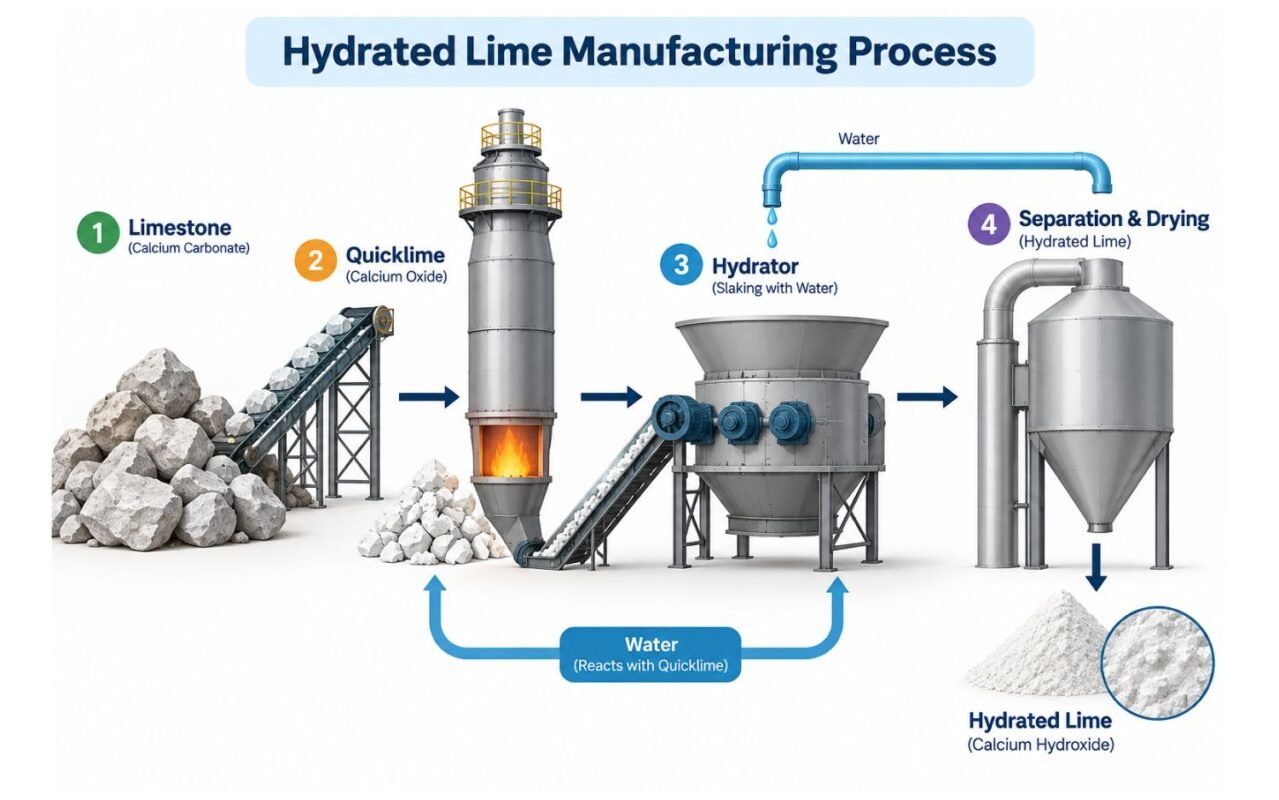
Step-by-Step Manufacturing Process of Hydrated Lime Powder
Producing high-quality hydrated lime involves more than simply adding water to quicklime. Each stage is carefully monitored to ensure the final product meets industrial quality requirements.
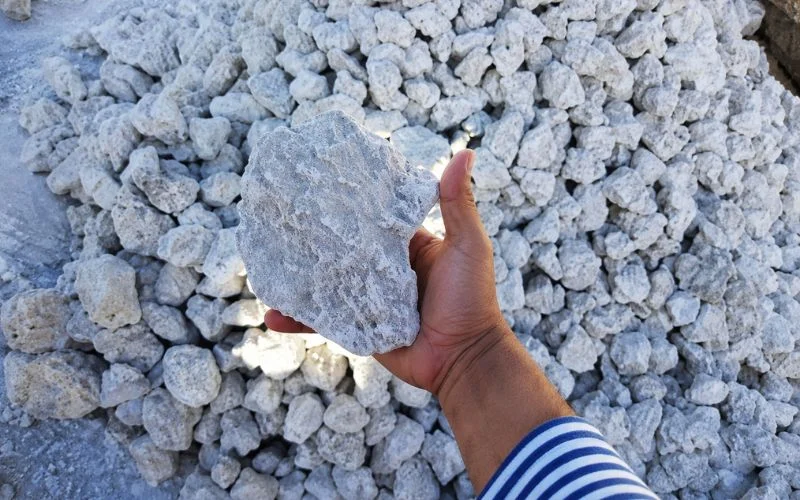
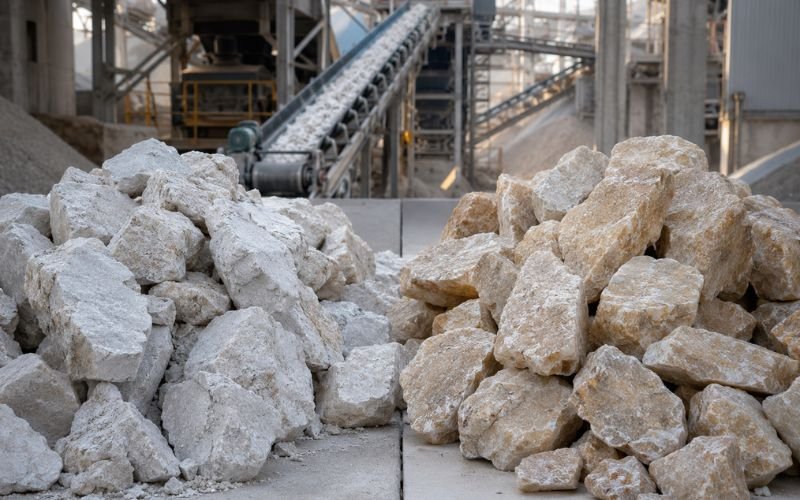
1. Selection of High-Quality Limestone
The process begins with carefully selected limestone containing a high percentage of calcium carbonate. The purity of the raw material has a significant impact on the final product’s chemical composition and overall performance.
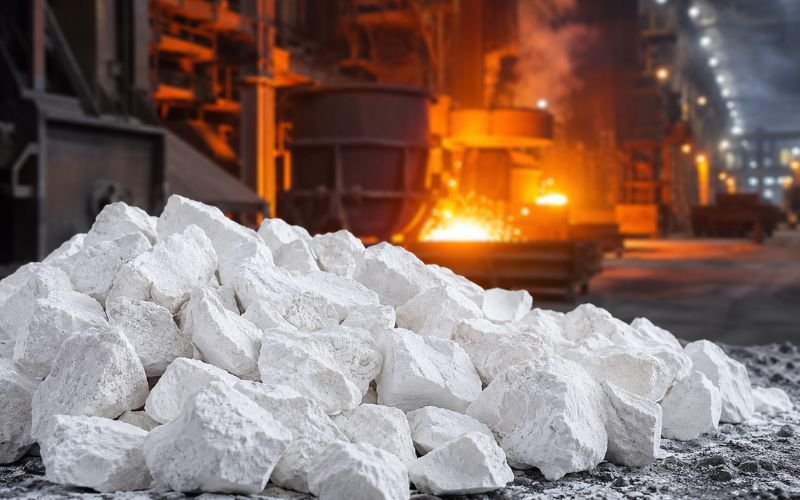
2. Calcination to Produce Quicklime
The limestone is heated in a rotary or vertical kiln at temperatures of approximately 900°C to 1,100°C. During this process, carbon dioxide is released, leaving behind calcium oxide, commonly known as quicklime.
Chemical reaction:
CaCO₃ → CaO + CO₂
Proper temperature control during calcination is essential to achieve consistent quicklime quality.
3. Controlled Hydration
The quicklime is then transferred to a hydration unit, where a carefully measured quantity of water is introduced. This highly exothermic reaction generates heat and converts calcium oxide into calcium hydroxide.
Chemical reaction:
CaO + H₂O → Ca(OH)₂ + Heat
Maintaining the correct water ratio is critical. Too much or too little water can affect particle size, purity, and product consistency.
4. Grinding and Classification
After hydration, the material is finely ground and passed through air classifiers to achieve the required particle size distribution. Fine and uniform particles improve dispersion, reaction speed, and handling in industrial processes.
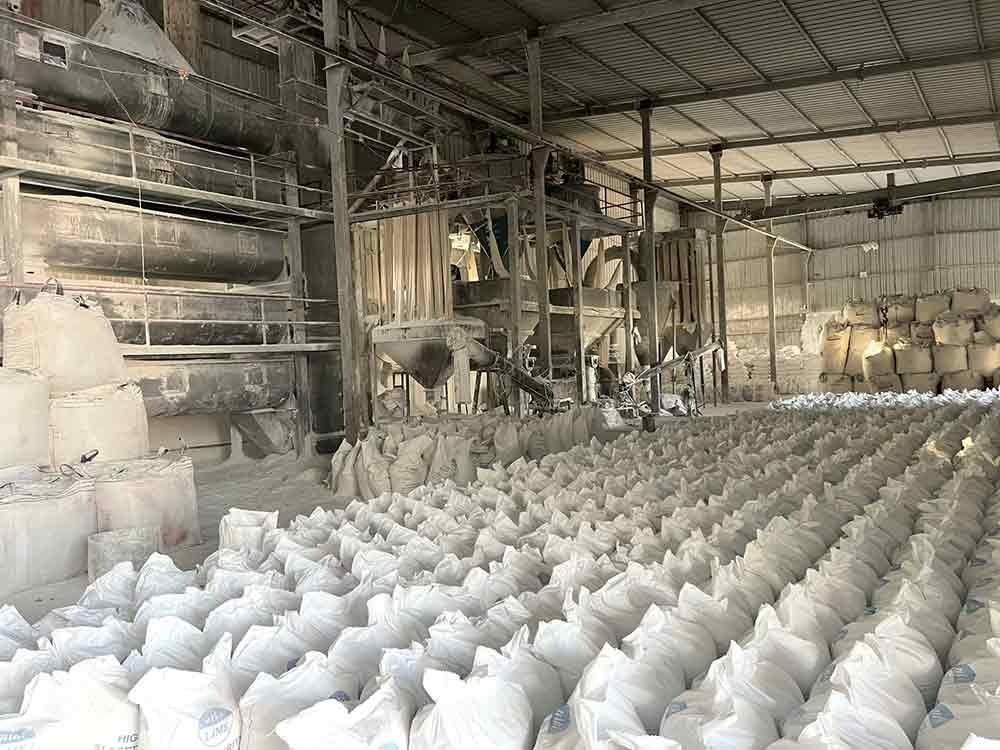
5. Quality Testing and Packaging
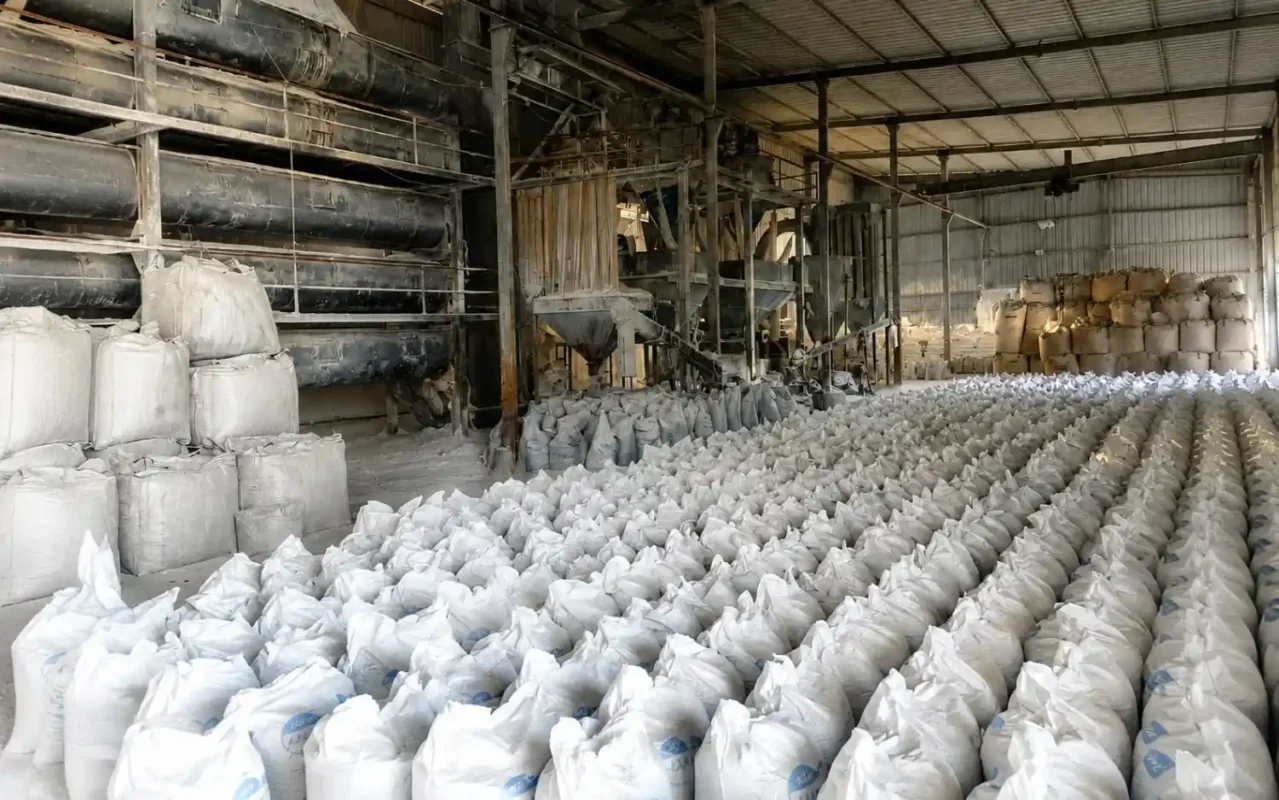
Before dispatch, every batch undergoes rigorous quality checks. Parameters such as calcium hydroxide content, moisture level, fineness, and insoluble matter are tested to ensure consistent product quality.
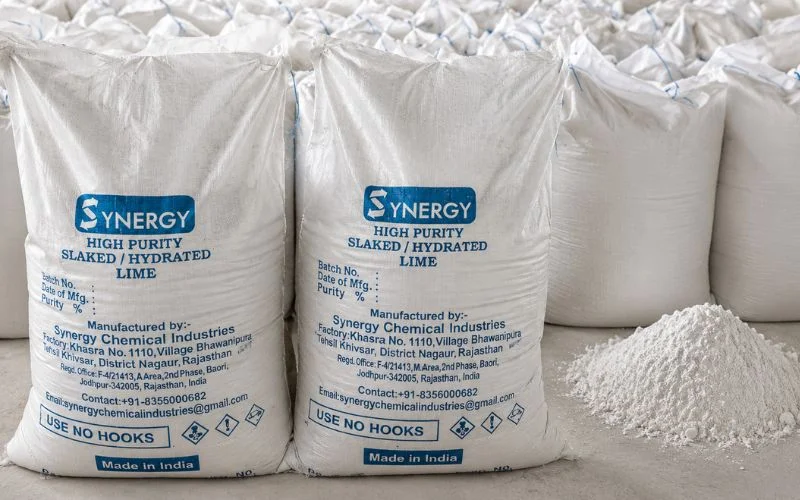
The finished hydrated lime powder is then packed securely to minimise moisture absorption during storage and transportation.
Why Quality Control Makes a Difference
Not all hydrated lime performs the same. Manufacturing precision and quality assurance determine how effectively the product performs in demanding industrial environments.
Key quality parameters generally include:
- Calcium hydroxide content
- Moisture percentage
- Particle fineness
- Insoluble residue
- Bulk density
- Product consistency
Reliable testing helps ensure predictable performance, reduced wastage and improved process efficiency for industrial users.
Industrial Applications of Hydrated Lime Powder
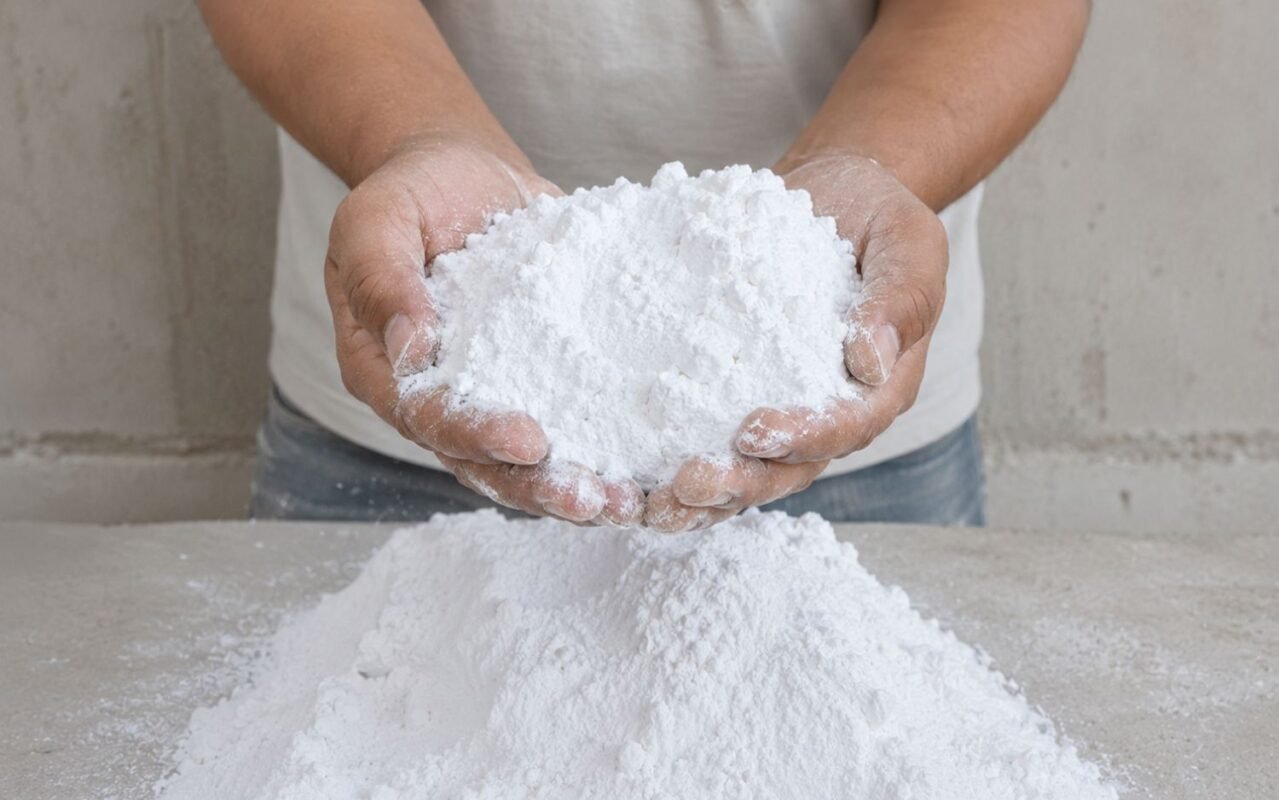
Hydrated lime powder is valued for its versatility across numerous industries.
Water Treatment
Hydrated lime is widely used to adjust pH levels, soften water and remove impurities from drinking water and wastewater treatment systems.
Steel Industry
Steel manufacturers use hydrated lime during refining to remove impurities such as sulphur and silica, helping improve the quality of finished steel.
Sugar Industry
In sugar processing, hydrated lime assists with juice clarification by removing suspended impurities and improving processing efficiency.
Construction
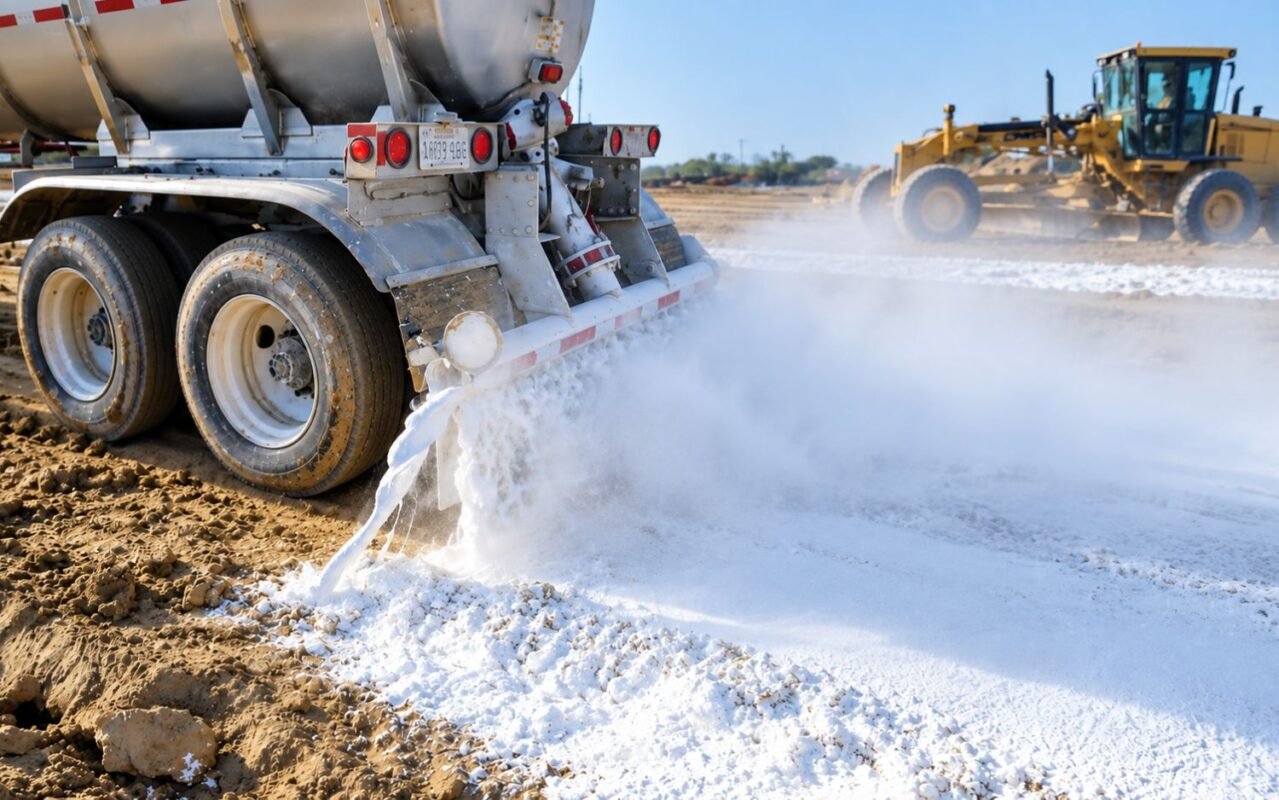
The construction sector uses hydrated lime in mortars, plaster and soil stabilisation because it improves durability, workability and long-term performance.
Chemical and Environmental Applications
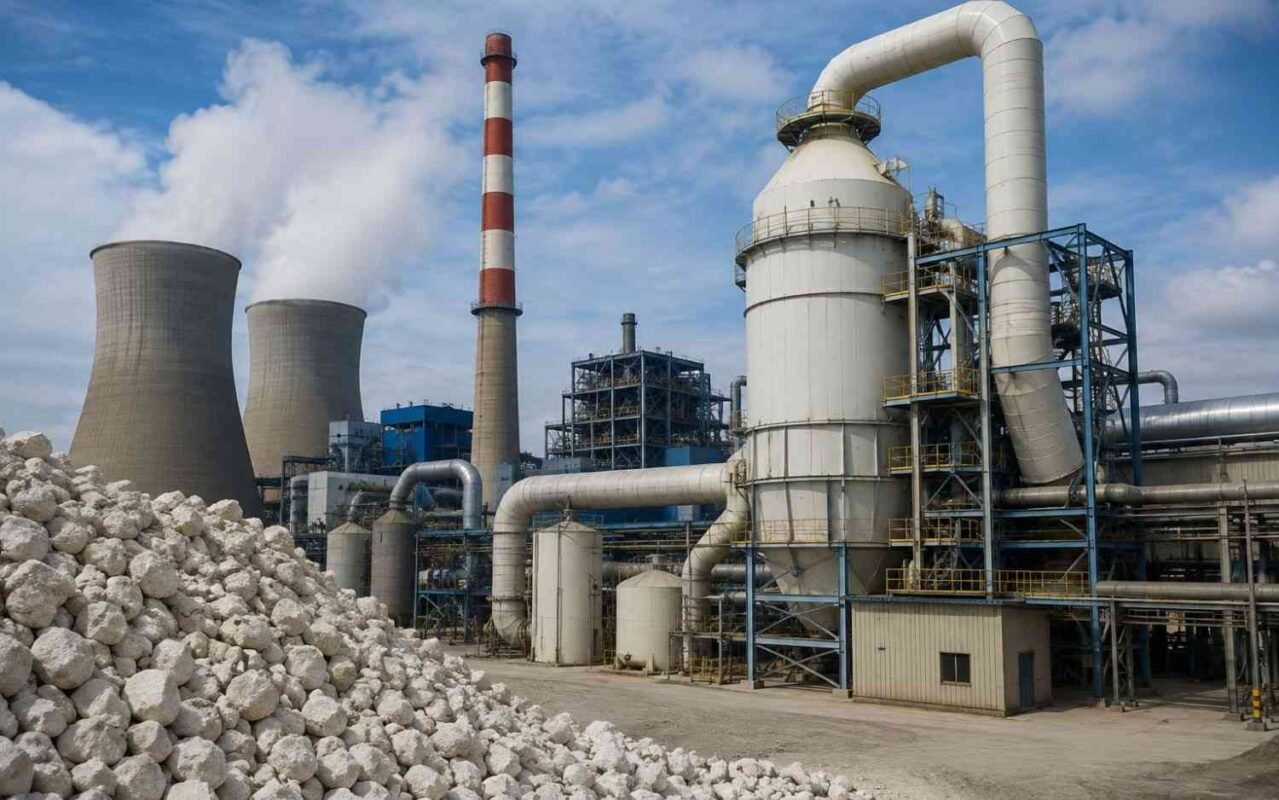
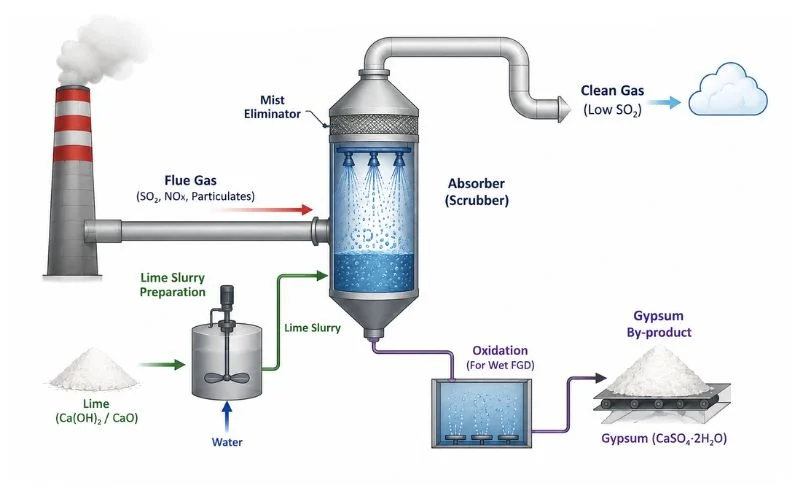
Hydrated lime is also used in chemical manufacturing, flue gas treatment, effluent neutralisation and environmental pollution control, where its alkaline properties help neutralise acidic compounds.
How to Choose a Reliable Hydrated Lime Manufacturer
Selecting the right manufacturer is just as important as selecting the product itself. Before placing a bulk order, consider factors such as manufacturing capability, quality control procedures, consistency of supply, and technical support.
A dependable manufacturer should be able to provide:
- Consistent product specifications
- Comprehensive quality testing
- Reliable bulk supply
- Safe packaging and storage practices
- Technical guidance for industrial applications
These factors help reduce operational issues and ensure consistent performance across production processes.
Why Manufacturing Expertise Matters
The manufacturing process determines far more than the appearance of hydrated lime powder. It influences purity, reactivity, particle size and overall performance in industrial applications. Choosing a manufacturer that follows controlled production methods and strict quality standards helps businesses achieve better process efficiency and dependable results.
At Synergy Chemical Industries, we focus on producing high-quality hydrated lime powder through carefully controlled manufacturing processes and consistent quality checks. Whether your application involves water treatment, steel production, construction, or chemical processing, selecting the right grade of hydrated lime can improve operational efficiency and long-term performance. If you’d like to learn more about our products or discuss your industrial requirements, our team is always ready to provide technical guidance and product information.
FAQs
Q1. How is hydrated lime powder manufactured?
Answer: Hydrated lime powder is manufactured by calcining high-purity limestone to produce quicklime, followed by a controlled hydration process. The material is then ground, classified, tested for quality and packaged to ensure consistent performance across industrial applications.
Q2. Which industries use hydrated lime powder?
Answer: Hydrated lime powder is widely used in water treatment, steel manufacturing, sugar processing, paper production, chemical processing, mining, environmental applications and construction due to its excellent pH control and purification properties.
Q3. What are the key quality parameters of hydrated lime powder?
Answer: Important quality parameters include calcium hydroxide content, moisture level, particle size, fineness, insoluble matter, bulk density and chemical purity. These factors influence the product’s effectiveness in different industrial applications.
Q4. Why is Rajasthan a leading hub for hydrated lime manufacturing?
Answer: Rajasthan is known for its abundant high-quality limestone reserves, well-established manufacturing infrastructure and experienced mineral processing industry. These advantages make it one of India’s leading regions for producing high-quality hydrated lime powder.
Q5. How does Synergy Chemical Industries ensure consistent hydrated lime quality?
Answer: At Synergy Chemical Industries, we focus on controlled manufacturing processes, carefully selected raw materials and rigorous quality checks to deliver hydrated lime powder that meets the performance requirements of diverse industrial applications.